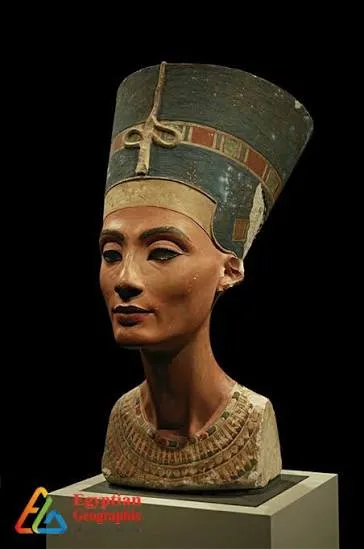
Treasure in the Civil Code: it is a buried or hidden movable thing whose ownership no one can prove. If a person proves his ownership of it, it is not considered treasure.
Treasure whose owner is unknown belongs to the state, and whoever finds it is entitled to a reward determined by the competent authority in accordance with the established rules.
The Antiquities Protection Law and its amendments determine (the nature of an antiquity, and the cases and conditions under which its holder may keep it)
Any immovable or movable property is considered an antiquity when the following conditions are met:
That it is a product of Egyptian civilization or the successive civilizations, or a product of the arts, sciences, literature or religions that arose on the land of Egypt from prehistoric times until one hundred years ago.
That it has archaeological or artistic value or historical importance as a manifestation of Egyptian civilization or of the other civilizations that arose on the land of Egypt.
That the antiquity was produced or arose on the land of Egypt or has a historical connection with it. The remains of human races and of the creatures contemporary with them are treated as antiquities, which are registered in accordance with the provisions of this law
By decision of the Prime Minister on the proposal of the minister responsible for antiquities, any immovable or movable property of historical, scientific, religious, artistic or literary value may be considered an antiquity whenever the state has a national interest in preserving and maintaining it, without being bound by the time limit set out in the preceding article, and it is registered in accordance with the provisions of this law; in this case the owner of the antiquity is responsible for preserving it and making no change to it, from the date he is notified of this decision by registered letter with acknowledgement of receipt
Thus all immovable and movable antiquities and the lands considered archaeological are public property, except what is waqf or private property, which may be owned, held and disposed of in the cases and under the conditions set out in this law and its executive regulations
Every fixed or movable antiquity (one hundred years old or more, or considered an antiquity by decision) is public property of the state.
Digging or excavating with the intention of obtaining antiquities is prohibited except under a licence from the competent authority (the Supreme Council of Antiquities).
Whoever finds an antiquity by chance must report it immediately to the nearest security or antiquities authority, preserve it and not dispose of it.
Trading in, smuggling or concealing antiquities are aggravated crimes punishable by imprisonment and large fines, and may reach aggravated imprisonment or life imprisonment in some forms, and are aggravated if the perpetrator is a public official or committed the crime as part of a gang.
A reward may be granted to whoever reports or hands over antiquities.
The tools, equipment and vehicles used in the crime are seized and confiscated
The holder’s right to keep the antiquity after registering it
The law allowed whoever lawfully holds antiquities to keep them after registering them with the competent authority, and required him to present them for registration within the period it set.
He keeps them as a holder and custodian, not as a full owner, because antiquities are public property of the state.
This right has restrictions:
The holding must be prior and lawful. It does not apply to someone who has recently found an antiquity or dug to obtain it; such a person must report and hand it over.
It may not be disposed of by sale, gift or export, nor may its possession be transferred without the permission of the competent authority, and trading in antiquities was prohibited after the 2010 amendment.
The holder must preserve it and enable the competent authority to examine and inspect it.
The state has priority in purchase or expropriation for public benefit in return for compensation in some cases.
Any antiquity not registered within the set period is considered unlawful holding, exposing its holder to criminal liability.
Land owned by others or licensed:
Digging in another’s land without his permission entails separate civil and criminal liability, in addition to the above.
Even if the land is yours, that does not give you the right to keep what you find or to excavate for it.
In conclusion, if you find something that may be an antiquity: do not dig, do not move it and do not sell it, and report it to the competent authorities immediately. This protects you from criminal liability and preserves your right to the reward
What is not archaeological (such as modern hidden coins or jewellery whose owner is unknown) remains within the scope of the provisions of the Civil Code, with the obligation to report.
Registration is carried out by forming a committee from the antiquities authority for examination and entry in a special register in accordance with the law, specifying its location and the holder’s signature, and it is considered an existing lawful holding; holding what is found or extracted by digging is not legitimized.
