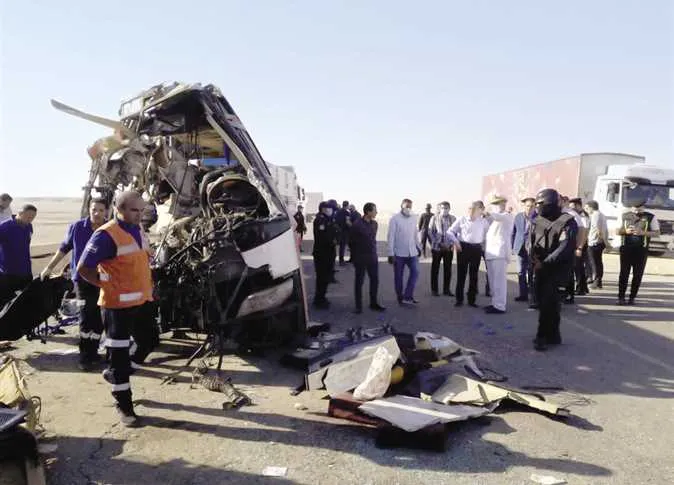
A sad morning, and two news reports in a single day: a minibus carrying players home from a tournament in Cairo collides with a truck, and a Super Jet bus collides with a pickup truck. The toll: four dead and sixty injured. We grieve for two days, then life goes on, and the questions remain unanswered. Worse still, the news no longer shocks us as it should.
Let us be frank: what happened is no exception. These are two more links in a chain that keeps repeating. When crashes recur in the same way, the cause is not fate alone, but gaps we know about and have never closed.
So what is the solution?
First: a fit driver before a fit vehicle. Regular, surprise drug testing for truck and bus drivers, and a cap on continuous driving hours. An exhausted driver is a danger on wheels.
Second: oversight that never sleeps. Cameras, radars, and electronic tracking for heavy vehicles and intercity buses, with immediate fines that reach their target, no favors and no connections.
Third: more human support for traffic officers. No one denies the effort traffic officers make every day, in the sun and the cold and on dangerous roads, and how many lives have been saved by their last-minute intervention. But cameras record, while officers on the ground are the ones who stop danger in the moment. That is why we need more of them on highways, at city entrances, and during peak hours and holiday seasons, along with modern training, equipment, vehicles, and communication devices worthy of their mission, and fair incentives that reward the disciplined among them. Those who carry people’s lives deserve to be carried in turn.
Fourth: real licensing and real inspection. Serious technical inspection of vehicles that goes beyond a stamp and a piece of paper, and driver’s licenses issued only after rigorous training and testing.
Fifth: a road that protects those who travel it. Continuous maintenance, lighting, clear signage, separate lanes for heavy transport, and regulated movement of heavy vehicles on highways, especially at night and during peak hours.
Sixth: accountability that reaches company owners. The driver should not pay the price alone. Whoever operates an unsafe vehicle or imposes a schedule that exhausts the driver shares the responsibility.
Seventh: a new culture. Speeding is not courage, and reckless overtaking is not skill. We need ongoing awareness campaigns in the media and in schools that make respect for the road a public habit.
Eighth: faster rescue. Fixed ambulance stations along long highways, because every minute of delay can mean a lost life.
Our lives are not numbers in news bulletins. Behind every victim is a home that waits, a mother who prays, and children who ask. And the question we must ask after every crash is not “What happened?” but “What did we do to keep it from happening again?”
Let us stop the bleeding before the next headline is written.
