
Domestic Violence
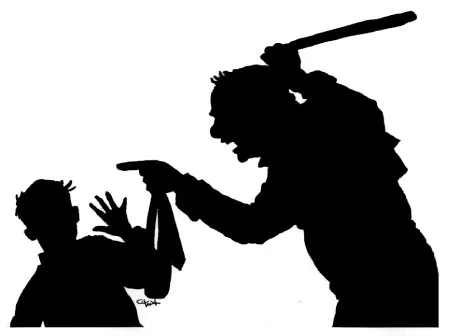
Dr. Bahaa Helmy Writes in Al-Fagr newspaper:
Domestic violence is any aggressive behaviour, including physical, sexual, psychological and economic violence, that occurs within the family to inflict harm among its members. It causes material or moral damage not only at the level of the family but extends to the whole of society.
The motives for domestic violence may be linked to inherited beliefs, the level of culture and awareness in society, traditions and customs, as well as wrong upbringing and weak religious restraint, or to the instability of married life and divorce and the resulting disputes and loss of communication and dialogue among family members; and there are other motives, including economic or psychological ones.
Domestic violence takes many forms and shapes, including violence against women, such as subjecting females to circumcision, forcing girls into early marriage, beating children, or beating, wounding or injuring the wife.
All of these are crimes punishable under Egyptian law, which does not consider them acts falling under the cover of the discipline a husband exercises over his wife, an issue that has stirred wide media controversy and debate on social media in recent days.
It is true that the Constitution established equality and non-discrimination on grounds of sex or any other reason, and provided that a safe life is the right of every human being, that the human body is inviolable and that assaulting or mutilating it is a crime, that the state is committed to caring for the child and protecting him from all forms of violence, abuse, ill-treatment and sexual and commercial exploitation, that dignity is the right of every human being, and that the rights and freedoms inherent in the person of the citizen may not be suspended or diminished, nor restricted.
Hence assaulting the wife or the children are acts criminalized by the Constitution and the law.
Here the question arises as to the extent of the conflict between the rights and freedoms in the Constitution on the one hand and what the Court of Cassation decided on the other, namely “the husband’s right to discipline his wife lightly for every disobedience for which no prescribed hadd punishment exists, and he may not beat her excessively, even if rightfully”; the limit of excessive beating is that which affects the body and changes the colour of the skin, in accordance with the provisions of the noble Islamic sharia as a principal source of legislation.
We believe that such concepts need a calm cultural and intellectual dialogue in order to understand and settle the matters on which there is disagreement, since understanding is the right of every citizen, which is what we are trying to present in this article.
Sawt Al-Azhar newspaper did well to republish the statements of the Grand Imam, the Sheikh of Al-Azhar, and his legal vision, in which he wished to see legislation criminalizing beating, and said that violence against women or insulting them in any way is evidence of misunderstanding, gross ignorance or lack of chivalry and is religiously forbidden; and he stated that beating is not an obligation, a duty, a Sunnah or recommended, but is a permissible matter as the only remedy for the wife’s recalcitrance.
That is, the religious view is that beating (light discipline) is permissible for the recalcitrance of a wife who does not obey her husband in what she is religiously obliged to obey him in.
He said that the ruler has the right to restrict what is permissible if harm from it is proven, and that beating the wife causes psychological harm and reflects negatively on the family.
The newspaper presented Al-Azhar’s opinion on some women’s issues within the framework of the approach of renewal it is currently following. It considered violence against women religiously forbidden, that there is no legitimacy or basis for female circumcision, that forced marriage is rejected religiously and by faith, and that beating wives is prohibited in principle, among other issues.
Hence we call on the ruler to restrict what is permissible in disciplining the wife, because of the psychological and human harm it causes her, her family and society, and to settle this matter with the necessary legal amendment.
Two problems remain that must be worked on. The first: putting a final end to the issuing of fatwas from the pulpits by non-specialists who spread ideas that degrade women and beliefs against the human dignity of the mother whom God has exalted, and of whom Hafez Ibrahim said, “The mother is a school; if you prepare her, you prepare a people of good stock”; so what of when you beat her and break her in front of her children;.
And the second: reconsidering the media treatment of such matters and giving them sufficient time to develop awareness and build the human being, and to block the road to the ignorant and the holders of extremist thought who penetrate the minds and consciences of the ignorant or the uneducated.