
Dr. Bahaa Helmy Writes: A Sports Security Law Is Needed Before a Sports Law
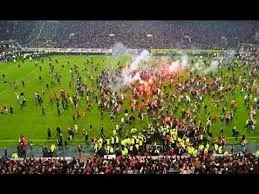
On 24/4/2016: A Sports Security Law Is a Necessity ... Before the Sports Law. In his first statement, the chairman of Parliament's Youth and Sports Committee pledged to work towards passing the new Sports Law within two months, saying that the return of fans to the stadiums tops the list of priorities. However, the draft Sports Law previously put forward by the Ministry of Youth and Sports in 2015 has nothing whatsoever to do with the organization of matches or the return of fans, quite simply because it concerns sports bodies in terms of their establishment and registration, general assemblies, boards of directors, sports federations, the settlement of sports disputes and investment in the sports sector. In other words, it is a law regulating the management of sports bodies, intended to replace the previous Law No. 77 of 75 and its amendments. The draft Law on the Organization of Sporting Events and the Protection of Participants and Sports Facilities, put forward in 2014, is an entirely different matter. It consists of 21 articles dealing with the organization of sporting events, ensuring the safety of spectators and participants, protecting sports facilities and combating stadium violence. Although it requires further legal and security study in comparison with countries that preceded us in this field, we can call it a sports security law, provided that it includes safety and security standards for sports stadiums. The truth is that the concept of sports security, according to international standards, is a new concept in both the sporting and the legal arenas, and safety and security standards are the most important elements on which this concept rests, whether in the organization of sporting events or in the drafting of national legislation. Federations and clubs are required to bear the cost of contracting private security companies for matches and to appoint a security officer at each club to communicate and coordinate with the police before, during and after matches. Federations and clubs are also responsible for searching spectators, appointing a coordinator for supporters' associations, relying on electronic tickets and installing cameras inside and outside stadiums, in addition to being responsible for ensuring the safety of buildings, facilities, gates, lighting and firefighting equipment, safety against hazards and natural disasters, and compliance with anti-money laundering measures and the prevention of betting, corruption or match-fixing. Club officials must report any problems or historic hostility between clubs' fans, and the possession of weapons, fireworks or prohibited items in sports bodies and stadiums is banned. It is a law to secure the safety of fans, players, sports officials and all of Egyptian society, in line with the practice followed in democratic societies. Therefore, rushing to debate the Sports Law in the House of Representatives in order to guarantee that some remain in their seats on boards of directors, or to enable others to run for them, without merging the two laws or establishing rules for organizing sports matches, safety and security rules in stadiums and the criminalization of violence, amounts to entrenching the principle of passivity and irresponsibility towards the state and society. The responsibility of members of the House of Representatives for the issuance of a sports security law is no less important than the moral, legal and national responsibility borne by officials of federations and clubs with regard to securing sporting events, rejecting violence and protecting society. One truly wonders, in astonishment, how clubs can establish investment companies and satellite channels and handle millions of pounds and foreign currencies to achieve moral and material gains without bearing the cost of securing the fans and the sports system that generates these profits for them, or the rights of society and the state. It has therefore become necessary to address the problems of violence and rioting in stadiums, to respect the rights of citizens and fans, and to protect children who watch matches at home from the negative effects that watching violence in stadiums has on behaviour and values. We must work towards the issuance of legislation regulating sports security in its comprehensive sense in order to achieve security and the rule of law, in addition to community participation, for the entire burden cannot be placed on the security services and the state alone.