
Dr. Bahaa Helmy Writes: Arab Popular Movements, Yesterday and Today
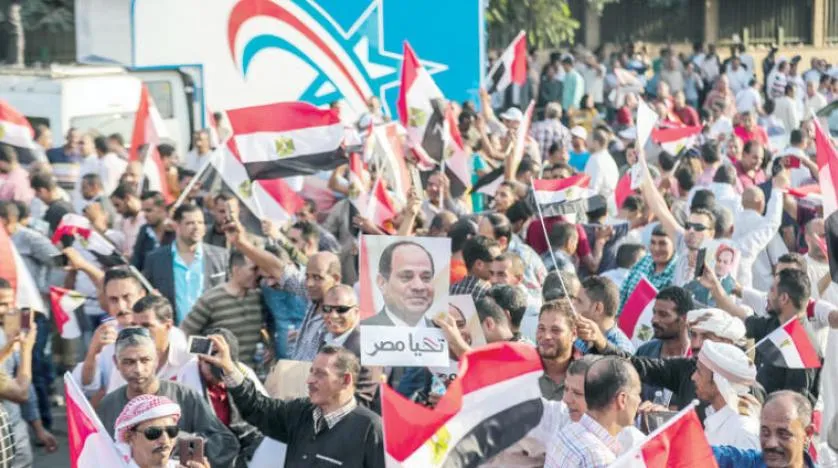
The United States of America previously adopted its support for creative chaos in a number of Arab countries under the name of the “Arab Spring”, to bring down some of their regimes and national institutions after the success of the Anglo-American plan to destroy Iraq and disband its army under the name of fighting terrorism. The United States and the West led the idea of forming militias in place of the Iraqi army, to fuel a sectarian and denominational conflict that distracted everyone from the plundering and squandering of Iraq's natural resources and wealth, and helped entrench a sectarian and denominational identity instead of a national identity, while opening the geographical and political borders to regional powers, before the region was targeted with the curse of terrorism at the hands of the Islamic State organization, which committed every crime against humanity, stability and development. Libya was targeted with the same method and tools, with the Brotherhood and terrorist groups installed in Tripoli to entrench partition; Syria was turned into an arena of civil war and a hotbed of internal and regional conflict; and the same attempt was made in Yemen. In Egypt, however, the people, with their faith in God and their trust in their armed forces, stood up and brought down those plans. These events were marked by the United States and Europe taking center stage, providing political, material and logistical support for the protests at the time in a planned manner, together with elements from inside and outside who were called activists, in order to carry out specific assignments leading to chaos and partition under the banner of democracy and freedom, while the White House took charge of issuing statements and commenting on events one after another. True, the Arab states were targeted with the weapons, bombs and technology of chaos, but they failed to carry out their plans in full, just as they failed to wedge an ISIS state among the states of the region to help entrench Brotherhood rule — not to mention what American President Trump announced while running in the American elections about the billions of dollars his predecessor paid to the Brotherhood, exposing American and European policies in the region. There is no doubt that the results of the first phase of the protests shook peoples' confidence in their rulers and entrenched a general impression among the masses of the tyranny and corruption of the regimes and the need to put them on trial, which led some governments of countries witnessing mass protests to take the initiative and resign. As for the second phase of the protests, which reached Sudan, Algeria, Lebanon and Iraq, it differs from the first phase in the mechanisms and methods used. It was called a “movement” (hirak) instead of a “spring”; statements are broadcast from behind screens in the name of unidentified leaders of the movement, relying on satellite communications technology; and the movement chants respectable slogans such as “fighting corruption, non-discrimination, the role of women, and the demand to form a technocratic salvation government to run the country's affairs”. The protests coincide with the difficult economic conditions the countries are going through, and the movement's tactics have appeared in showing staying power and displaying vitality and energy to express the enthusiasm of the movement's young people, with mass celebrations in the streets and the demand for a national government of independents instead of the existing regimes. We see Iraq going through more difficult and bloodier conditions at present, which threatens the danger of a long-term sectarian and denominational conflict between Sunnis and Shiites that may contribute to the re-emergence of ISIS or other terrorist groups that have recently claimed responsibility for some terrorist operations. In Algeria, the army is making efforts to hold elections and to preserve state institutions, while the movement's tactics of taking to the streets have continued for months. As for Lebanon, which is facing extremely [difficult] economic conditions and has a system of government based on quota-sharing according to the “Taif” balance, in which Hezbollah represents one of Iran's claws, it is still searching for solutions to treat the economic situation and secure food stocks, and is trying to form a new government. We note that the United States and the West have withdrawn from taking center stage as they did in the first protests; this is due to the desire to remedy the earlier negatives and the fall of the Brotherhood governments, and to calm the spirit of hatred that has become entrenched in the souls of the peoples of the Arab region. Whatever the names of the protests and the masses' aspirations for a better tomorrow, the West and Israel have settled plans that they will repeat attempts to carry out by all means, mechanisms and colors, to provoke the masses and mobilize them under the influence of the collective mind to march towards chaos that ends in the destruction and partition of states from within and the redrawing of geographical borders for warring statelets. Developing the national awareness of citizens is a national duty, together with foresight to face all possibilities — even if the next protests consist of electronic robots.