
Dr. Bahaa Helmy Writes: Are Foreign Terrorists… Fighters?
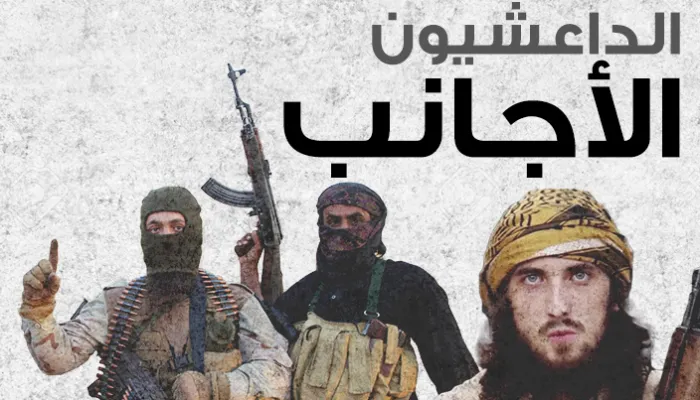
The Egyptian Anti-Terrorism Law defines a terrorist as any natural person who commits, attempts to commit, incites, threatens or plans, at home or abroad, a terrorist crime by any means whatsoever, even individually, or who contributes to such a crime within the framework of a joint criminal enterprise, or who assumes the command, leadership, management, creation or founding of, or participates in the membership of, any of the terrorist entities provided for in the law regulating the lists of terrorist entities and terrorists, or finances them, or contributes to their activity knowingly. It defines a terrorist group as any group, association, body, organization or gang composed of at least three persons, or other entity proven to have this status, whatever its legal or de facto form, whether inside or outside the country, and whatever its nationality or the nationality of its members, that aims to commit one or more terrorist crimes, or for which terrorism is one of the means it uses to achieve or carry out its criminal purposes. Despite the ambiguity surrounding the definition of terrorism in international conventions, it is agreed in the decisions of the International Law Commission that terrorist acts mean criminal acts directed against another state or the population of a state and calculated to create a state of terror in the minds of particular persons or groups of persons or the general public. The International Association of Penal Law defines terrorism as the intentional use of means of committing acts that endanger the lives of individuals, whatever their nationality, or destroy them, as well as their material property, through arson, explosion, flooding, the ignition of harmful substances and the use of asphyxiating substances in means of transport and communication, obstructing the services of public utilities, and polluting water, agricultural crops and food products. The International Criminal Court defines terrorist acts as “any use of force or violence against persons or funds or public or private property, for personal, political or ideological purposes”. Here, then, there is no room for disagreement over the concept or definition of terrorists and their criminal acts. However, many Security Council committees and officials deliberately put forward and circulate terms that contradict the established basic concepts, perhaps for malicious purposes. An example is the use of the term “foreign terrorist fighters”, both in the 2014 Security Council resolutions and in the 2015 document of the Security Council Counter-Terrorism Committee, which at the same time affirms the obligation to criminalize the financing of terrorism so as to cover all terrorist organizations and individual terrorists. Yet the Security Council defined foreign terrorist fighters as individuals who travel to a state other than their state of residence or nationality for the purpose of the perpetration, planning or preparation of, or participation in, terrorist acts or the providing or receiving of terrorist training, including in connection with armed conflict. The International Committee of the Red Cross has explained what is meant by a combatant in international conventions, and by an enemy combatant, and the confusion between international and internal armed conflicts. The use of the term “terrorist fighters” contradicts the definition of combatants in international humanitarian law, which considers combatants to be members of the armed forces of states, in both international and non-international armed conflicts. The status of combatant, from the point of view of the law, exists only in international armed conflicts. Moreover, calling a terrorist a fighter is incompatible with human rights, especially the right to life and protection, and contradicts reality. It also contradicts what the Secretary-General of the United Nations stated at the end of 2018: that terrorism is, at its core, the very negation and destruction of human rights; that we must fight terrorism relentlessly to protect human rights, while at the same time working to address the root causes of terrorism; and that human rights have a greater power to bring about harmony than terrorism has to bring about destruction. He stressed that terrorism should not be associated with any religion, race or gender. Therefore foreign terrorists cannot be considered fighters or warriors... They are terrorists, butchers and killers, and we must intensify efforts to change such mistaken terms and concepts.