
Dr. Bahaa Helmy Writes: Blocking Internet Sites to Protect National Security
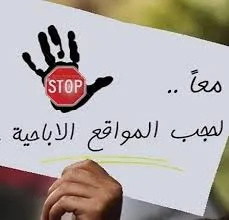
The Anti-Cyber and Information Technology Crimes Law issued in 2018 gave the competent investigating authority the right, whenever there is evidence that a site broadcasting from inside or outside the country has posted any phrases, figures, pictures, films or any promotional or similar material that constitutes one of the crimes set out in the law, to order the blocking of the broadcasting site or sites whenever this is technically possible. The blocking order must then be submitted to the competent court, and anyone against whom a judicial decision has been issued has the right to appeal it before the competent criminal court. Evidence derived or extracted from electronic devices or any means of information technology has the same value and probative force as physical criminal evidence in criminal proof. If any crime set out in this law is committed for the purpose of disturbing public order, endangering the safety and security of society, harming the national security of the country or its economic standing, preventing or obstructing the public authorities from exercising their functions, suspending the provisions of the Constitution, laws or regulations, or harming national unity and social peace, the penalty is aggravated imprisonment, together with confiscation of the tools and equipment used in the crime or that contributed to its commission. Any public official convicted of any of these crimes is dismissed from office. The law defined national security as everything relating to the independence, stability and security of the homeland and the unity and integrity of its territory, and matters relating to the affairs of the Presidency of the Republic, the National Defense Council, the National Security Council, the Ministry of Defense and Military Production, the Ministry of Interior, the General Intelligence Service, the Administrative Control Authority and the bodies affiliated with those authorities. Moreover, the measures taken by the security forces in the event of a violation of the law regulating the right to public meetings and demonstrations are consistent with domestic law and with the international standards regulating the right to freedom of expression and peaceful assembly. Here the question arises as to the legal grounds on which the High Commissioner for Human Rights relies in the statement in which it expresses its concern and demands of Egypt that “any response by the security forces should be fully consistent with international rules and standards regarding the right to freedom of expression and the right to peaceful assembly, as well as the right to a fair trial”. So what are these standards? The Universal Declaration of Human Rights provides in Article 29, paragraph 2, that in the exercise of his rights and freedoms everyone shall be subject only to such limitations as are determined by domestic law; and the International Covenant on Civil and Political Rights provides that in time of public emergency which threatens the life of the nation and the existence of which is officially proclaimed, the States Parties to the Covenant may take measures derogating from their obligations under the Covenant, as long as they are measures necessary to protect national security or public order or the rights and freedoms of others. Furthermore, the laws of the European Union and the rules of the International Federation of Association Football (FIFA), taken from English law, provide for the right of states to follow and monitor those who incite violence and rioting at stadiums on the internet; they are arrested, their sites are blocked, they are detained and prevented from traveling to any other country until the end of the sporting events, and judgments may be issued against them banning them from attending matches at home or abroad. Consequently, the international human rights organizations do not follow an ethical and professional approach in their work, deliberately ignoring the right of states to regulate and restrict these rights in line with national security and public order — a matter recognized in law and in practice — and criticizing particular states and not others, which points to discrimination, bias and unfairness. Moreover, the High Commissioner for Human Rights and Amnesty International, like other organizations, rely on Brotherhood reports and sources characterized by lies and fallacies, without regard to their truth or legal legitimacy. This clearly points to the truth of the description of these bodies as marked by the chronic bias, hypocrisy and selfishness that characterize the Human Rights Council, in the words of the American administration in June 2018.