
Dr. Bahaa Helmy Writes: Concrete Houses Threaten the Natural Magic of Siwa Oasis
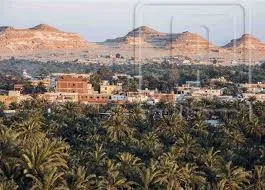
Siwa Oasis is one of the most famous ecotourism destinations in Egypt and the world. It lies in the Valley of Sands in Egypt's Western Desert, its people speak Arabic and Amazigh, and it boasts a wealth of breathtaking natural treasures that make it a unique tourist destination, one that some have called Egypt's lost paradise.
Siwa Oasis is famous for its olives and dates and its salt lakes. It has natural springs, some of them hot, as well as a sulphur spring, and it is home to the finest medicinal plants such as mint, wormwood, lemongrass and others.
It is renowned for therapeutic tourism such as sand burial, for safari and adventure tourism in the shifting sands, and for ecological and historical tourism, being one of the oldest human habitats. There lies the tomb of King Amun in the area of the Mountain of the Dead, which contains several rock-cut tombs, along with traces of the Greek and Roman eras, Alexander the Great and his adventures with the priests of Amun, Cleopatra's Spring and more. It has many hotels, sites and walls built of mud and rock salt, which releases negative energy. Siwa is also distinguished by the rarity of rainfall throughout the year, which allows the rock salt to retain its properties and hardness.
In truth, I am writing about what I saw in this oasis, which I consider an enchanting Egyptian paradise, not a lost one. Mountains, small hills and buildings made of mud mixed with salt surround it on every side, and one can watch the sunset and sunrise in a magnificent and unparalleled way, whether in the photographs you take or in person. We made several observations about this protected area. The first is the development in the oasis, represented by the Siwa water factory, which relies on groundwater flowing from the Congo; the salt factory, which produces varieties and types of salt according to the highest international standards and exports its output to many foreign countries; and the olive oil factory, famous for its very low acidity, in addition to some handmade carpet workshops and other crafts. This is genuine development that has not affected the nature of the protected area; rather, it brings in hard currency and employs the people of Siwa in its projects. What is striking is the friendly relationship between the citizens of Siwa and the members of the Armed Forces in the Western Military Region, and the close cooperation between them, the fruits of which can be seen in the stability of the oasis and the impossibility of terrorists infiltrating the area.
There are also private investment projects owned by the people of the oasis, particularly in the field of dates, after the UAE encouraged them to develop date and jam industries and to produce distinctive new varieties, and organised an annual competition for the best products under the patronage of the United Arab Emirates.
However, many thinkers, scholars and journalists have feared that the wonderful primitiveness that characterises the oasis would give way to urbanisation. Mr. Hamouda once coined the phrase "Do not approach this paradise," and the scholar Mr. Zahi Hawass has called for the necessity of preserving Siwa Oasis, which is considered a model of a unique ecosystem on a global scale. Yet the reality is alarming, as some residents have begun building new houses in the middle of the oasis with concrete columns, cement and bricks, in a scene at odds with the environment of the place, threatening to obliterate the features of this oasis if it is not rescued from modern construction.
The buildings, walls and remaining ruins made of mud and salt in this oasis speak for themselves and tell their history to every onlooker. Life and the beauty of nature in Siwa always draw attention and stir human emotions, as do its pure air and primitive way of life, for the peace of mind they bring and for man's eternal longing for nature, which has been altered and destroyed at the hands of urbanisation.
As for concrete, which has already destroyed Egypt's fertile agricultural land, it is a lifeless thing that represents an epidemic and a cancer on its way to destroying nature and the environment in Siwa Oasis, which has been visited by many kings, presidents and princes, such as Prince Charles, who stayed in its hotels that rely on candles and palm trees amid enchanting lakes.
We call on everyone to cooperate in taking the necessary measures to stop construction with concrete and bricks among the oasis's houses, immediately and decisively, because it is truly the main enemy threatening the natural magic of Siwa Oasis. The Ministry of Antiquities must cooperate with the Ministry of Environment and the governorate to preserve this unique oasis. Nor is it an exaggeration to ask the security authorities to prevent cement from entering the oasis except under special permits specifying its purpose and use. We must not repeat what has happened, and still happens every day, around our antiquities and our ancient civilisation, around which informal houses have been built. Enough is enough, and we all have hope in the future.