
Dr. Bahaa Helmy writes: Egyptian Universities and the Technology of the Future
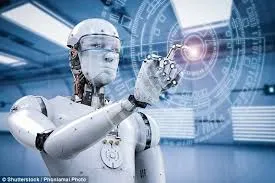
Klaus Schwab, Chairman of the World Economic Forum in Davos, coined the term "the Fourth Technological Revolution," which is defined by reliance on automatons, or "robots." He called on the international community to cooperate on how to steer this technology, which, in his words, will have severe repercussions and effects on human beings if robots replace people in jobs and in various fields of work.
The proceedings of the World Government Summit, held last February in Dubai, featured the largest number of scientific papers addressing future challenges such as globalization, education, health, sustainable development and foresight. The museum set up on the sidelines of the summit also displayed examples of future innovations and designs in the form of robots endowed with artificial intelligence. The coming technological revolution, therefore, will have robots as its main headline. Accordingly, Dubai took the initiative of creating a Ministry of Artificial Intelligence as part of its focus on the technology of the future.
At a conference in Lisbon, Portugal, a number of scientists voiced apprehension about the future use of artificial intelligence, describing it as both "a dream and a nightmare" at the same time. The dream would be the achievement of a major technological revolution that brings benefits to our world; the nightmare lies in the possibility that artificial intelligence and robots could be used to destroy human civilization. It could thus be the worst thing ever to happen in history, given the parallel risks if we are not prepared to face this future, whose features can be glimpsed in science fiction films: the use of lethal and destructive robots in wars, the widening of conflicts, such robots falling into the hands of terrorist groups, or their carrying nuclear materials. Their impact would also be felt directly on the human workforce in various fields, in addition to the greatest danger of all: leaving robots free to assess situations and make decisions based on the data they analyze according to their own databases.
Reality shows that countries around the world are keen to develop their systems on the basis of information technology and the manufacture of robots and drones, despite the risks and caveats set out above. The technology of the future is therefore inevitably coming, and faster than we expect, which may change the shape and patterns of human life in light of the uses of artificial intelligence. This at a time when Egypt is unable to import some of the equipment needed to detect explosives in order to confront terrorism.
While school and university students in countries around the world have succeeded in building robots with the help of the internet and by communicating with their peers in different countries, in addition to international festivals, competitions and exhibitions that welcome innovators and competitors of all ages, thereby creating a bank of ideas available to all, we may not be advanced in this field. We must prepare minds and encourage our young people to innovate and create.
Here lies the role and responsibility of Egyptian universities and institutes, which bear the burden of anticipating the technology of the future and dedicating every effort to intellectual and scholarly openness, introducing the topics and ideas of artificial intelligence and integrating these technologies for students to research and study, particularly in specialized faculties and institutes, so as to open the field of science fiction in a practical way, with graduation projects being robots, as is the practice in advanced countries. It is only logical to harness science in the service of humanity and the security of society. Scientific institutions must therefore study and meet the needs of the Armed Forces and the Police for the technology of the future, bearing in mind the invention of intelligent micro-robots to form military units powered by artificial intelligence, whether in the virtual world or on the ground, before the future takes us by surprise or this technology falls into the hands of terrorist gangs backed and funded by the forces of evil and darkness.