
Dr. Bahaa Helmy Writes: Household Water Bills… Problems and Solutions
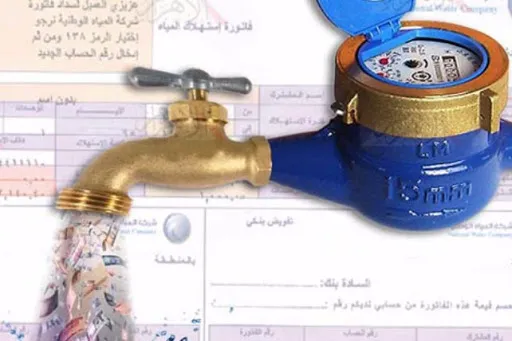
Many readers have asked about the reasons for the problem of high household water bills, even though the price of the highest bracket per cubic metre of water has remained fixed at 3.15 pounds.
Studying the problem in order to try to reach the best solutions, it turned out that there are cases in which the amount of household water consumption bills increases, even though the price of the highest bracket per cubic metre of water has remained fixed at 3.15 pounds, and it also turned out that there are many reasons for this.
First, the household drinking water bill includes the value of the water consumed plus 70% of this value as a charge for “household sanitation”.
For example, if your household’s monthly water consumption is (50 cubic metres, say), your bill will be (50 x 3.15 pounds per cubic metre of water = 157.5 pounds for the water consumed, plus 118.13 pounds as the household sanitation charge), in accordance with the Prime Minister’s decree of 2018 currently in force.
But the real problem from which many suffer is not in the method of calculation; rather, it lies in the accumulation of consumption and non-payment every month, which multiplies the total amount due without any prior warning to the consumer of the volume and amount of the monthly bill required of him.
If the volume of consumption accumulates, the 70% of the amount due as the sanitation charge increases, which leads to water bills rising to thousands of pounds at times without the homeowner knowing, which has made the complaint a collective one in various places across the Republic.
This is due to several reasons, most notably the irregularity of the meter readers in reading household water meters, the lack of interest of some employees at the offices and outlets of the water company in recording citizens’ notifications of the volume of consumption, in addition to the lack of seriousness of the Holding Company for Water and Wastewater in providing or following up the numbers and social media accounts assigned to receive citizens’ notifications of the monthly water consumption in their homes, which has become the subject of complaints.
The demand to install smart (prepaid) electronic water meters in citizens’ homes has become a vital demand to limit arbitrary estimates, and a solution to the problems of the meter readers and their small number in light of urban expansion, the increase in new urban communities and the huge population growth, so the government must quickly solve these problems that affect the life and livelihood of the citizen.
And in keeping with the gigantic and great efforts made by the state to develop government performance and digital transformation, and the close follow-up by the political leadership of the implementation of those programmes at the various levels.
As for the problem of providing and installing meters for citizens, in light of what the Ministry of Housing announced at the beginning of this year about its plan to install only 3 million smart meters within 4 years, while the number of buildings and housing units exceeds this number at least eight or ten times, given that no accurate statistics on them are available.
The state has extraordinary capabilities through which it can provide those meters in a short time, as is done with prepaid electricity meters, or in line with the unprecedented rates of achievement being realized on the land of Egypt.
As for the government’s responsibility for solving the problem of high household water consumption bills, and for remedying the failure of meter readers to read water meters monthly, (the current Prime Minister) announced it when he was Minister of Housing in December 2016: “the citizen has every right if his consumption meter is not read, and bills must be reviewed so that the value of consumption does not accumulate on citizens”.
We therefore call on the government to promptly issue decisive instructions to divide the citizen’s household water consumption by the number of unpaid months, to limit the rise in the sanitation charge as long as the meter reader does not do his job, with the possibility of periodic inspections by meter readers every three or six months to check and correct the readings until the water meters are replaced with prepaid ones.