
Dr. Bahaa Helmy Writes: Pollution in Cairo, Between the Anvil and the Hammer
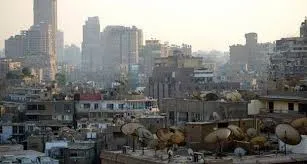
The poet said: "The slicer, the sliced and what lies between them" – a description that fits the current situation of Cairo's residents, in light of what is being said about the accuracy of reports that Cairo has taken first place in the world for environmental pollution. The slicer is what some foreign newspapers have reported about reports attributed to certain international organizations, to the effect that Cairo is the most polluted city in the world in terms of air, light and noise pollution, after previously ranking second – pointing to the negative effects on public health, on tourism and on economic and social development in Egypt. The sliced is the statement and remarks of Ministry of Environment officials casting doubt on the accuracy of those reports' data with loose phrases, such as that the data were not issued by the ministry; that air pollutants are monitored through the ministry's national network; that the ministry is the body competent to issue the annual State of the Environment report in Egypt; that the Egyptian government has set targets for improving air quality under the national sustainable development strategy; and that the ministry plans to increase recycling rates for municipal and agricultural waste. As for noise, the ministry said the measurements point to inaccuracy, despite the capital's congestion and commercial activity continuing late into the night. This means that the Ministry of Environment rejects Cairo's ranking as the most polluted city in the world while implicitly accepting the second place it held in earlier reports. And between the slicer and the sliced lies "the object" – the residents of and visitors to Cairo, whether it sits in first place or is still in second place on the list of the world's most polluted cities, because everyone who breathes Cairo's air will be at risk of disease, with negative effects on the health of successive generations, in addition to the negative impact on investment, economic and social development and national security. Here the question arises: is the way the government, represented by the Ministry of Environment, has dealt with this report, or its approach to this serious file, consistent with the scientific method, knowledge and credibility in presenting problems so as to reach the best solutions, or is the matter to be left as it is? The last report on the State of the Environment in Egypt covered 2016 and was issued in 2017, and there are no other reports or studies on pollution at the level of the capital or the country, according to the ministry's official website. That report included an inventory of the causes and sources of air pollution that endanger human health and living beings in general in Egypt, identifying six types, most of which involve vehicle exhaust, fuel combustion and factory chimneys. The report concluded with some recommendations, including the need to draw on the expertise of countries that preceded us to carry out a strategic environmental assessment study. This raises the question: where is the realistic and scientific argument and evidence the Ministry of Environment has used to respond to such reports? Where are the Ministry of Health's statistics on diseases and causes of death? Where are the tree-planting strategies and initiatives, and the national strategies in the industry, tourism and transport sectors? Where are the vehicle inspection stations at licence renewal, and the database prepared to reduce sources of pollution and not merely to collect additional fees? Where is the State's plan to reduce pollution in Cairo? Where is the ministry's plan and role and its documented efforts to confront this pollution? Where are the internationally coordinated efforts with the competent bodies, such as the United Nations Environment Assembly, the World Health Organization and others, to deal with this danger to human life? It is true that efforts are being made to raise awareness to counter rumors, but failing to deal with problems transparently and with enlightened thinking, especially in the field of pollution and the environment, will lead citizens to lose confidence in the reports of government institutions, and their sense of loyalty and belonging will inevitably be affected, as they are caught between the anvil and the hammer (two matters, both of them evil) – the anvil being what the blacksmith hammers iron on.