
Dr. Bahaa Helmy Writes: Refugees — When Will They Return?
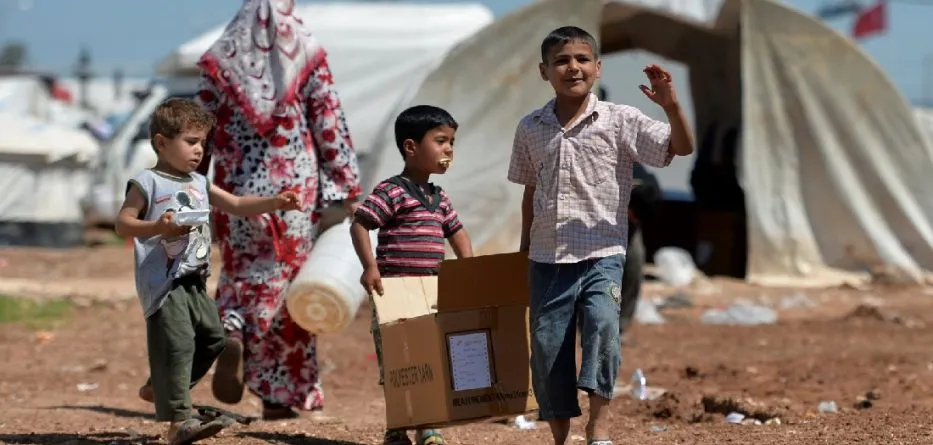
On the occasion of World Refugee Day, set for 20 June every year under the United Nations resolution issued in February 2001 on the occasion of the UN General Assembly's celebration of the fiftieth anniversary of the 1951 Convention relating to the Status of Refugees, as well as the 1966 Protocol relating to the Status of Refugees. And in accordance with the United Nations instruments and initiatives concerning refugees and the forcibly displaced, which aim to establish a global framework for a more effective and equitable response by the countries and various societies of the world, at a time when the problems of refugees' rights are worsening and they are exposed to racism, discrimination and rejection in many European countries, in contradiction with the charters of the United Nations and of the European Union itself, which has led to a European split over this problem. At the same time, the American president has adopted a hard-line view of refugees and displaced persons, announcing his intention to deport irregular migrants in the coming months. This leads to the fading and erosion of the role of the United Nations, the High Commissioner for Refugees and its other affiliated bodies, especially after the American decision to block funding for refugee aid programs and to stop funding the relief agency (UNRWA) at the end of 2018, whether for political or economic reasons. The American position supports the position of the European countries that refuse to contribute to solving the problem and to abide by the international and European human rights charters. Figures and statistics conflict regarding the numbers of refugees and displaced persons outside their country of nationality or habitual residence, whether because of persecution on grounds of race, religion, nationality or membership of a particular social group, or because their homelands and homes have been destroyed and they have been displaced at the hands of terrorist militias or armed groups backed according to international agendas, and they cannot yet return to their homelands. The reports of the High Commissioner for Refugees indicate that more than 68.5 million people have been forced to flee their homes around the world, among them more than 25.4 million people who crossed borders and are counted as refugees according to the 2017 reports, and that about 6 million Syrian refugees are still in neighboring countries, most notably Egypt, Lebanon, Jordan, Iraq and Turkey, in addition to about 5 million Palestinian refugees, and that these numbers pose a challenge to the countries hosting them. The High Commissioner for Refugees had previously announced the suspension of many of its projects to help refugees because it was unable to raise the financial resources, and it is therefore losing the credibility of its work and the foundations on which it was built, which led it to resort to advertising and propaganda devoid of substance to solve the refugee problem, such as the 2016 New York Declaration to protect refugees through three new tracks: more investment in the communities hosting refugees; strengthening the inclusion of refugees through jobs, education and opportunities; and continued commitment to resettlement — none of which was implemented on the ground. Then came the announcement by the UN General Assembly in December 2018 of an innovative global consensus to better serve the forcibly displaced and their host communities under the name “Global Compact on Refugees”, which it described as a historic agreement. The UN organization declared that no country should be left to respond alone to massive refugee flows, that refugee crises require global responsibility-sharing, and that this compact is a powerful expression of how we work together in today's fragmented world — without any solutions on the ground, as usual. The organization is currently calling on civil society in the countries of the world to undertake initiatives to train, educate and entertain the children of refugees, following the example of the integration of Syrian migrants into Egyptian society, with no real international solutions on the horizon. Do not wait for solutions from these organizations and their affiliated bodies as long as they do not declare the reasons for the displacement and expulsion of millions of people from their homelands, and the reasons why they have not been enabled to return until now. Homelands are built only by the arms and sweat of their sons and citizens, and the date of return of the displaced and refugees will be set as soon as the support and financing of conflicts, wars, destruction and killing in their countries stops, and the implementation of international conspiracies against the Arab state and others ceases. Instead of cutting off support for the international organizations that care for and help refugees and displaced persons, stop supporting the states and groups that feed terrorism, deepen division and carry out schemes — then the refugees will return to their homelands.