
Dr. Bahaa Helmy Writes: Sanitation Workers' Right to Be Honored
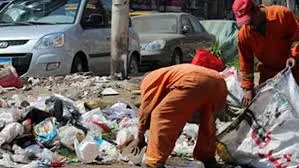
On the 1st of every year, the world celebrates International Workers' Day, or rather Labor Day, honoring workers who deserve recognition for their active role in increasing production and their contribution to economic development, as well as the social and economic achievements of the labor movement. Although this occasion also includes honoring sanitation workers, they deserve a special tribute from us befitting their role and their giving at the national and international level, given the particular nature and harsh, demanding conditions of their work, and their distinguished and pioneering role in creating a clean, healthy environment and refined societies. Sanitation workers perform a national duty and a lofty social and humanitarian mission, whether in cleaning streets and roads of garbage and dust or in sewage work, and they perform hard work that takes a toll on their physical and mental health, with contentment, dedication and tolerance. They work at all hours, under the sun and in the cold; they clean under cars and under people's feet; they breathe exhaust and foul smells; and they give their effort and time for low wages and an unstable future for their families. This has led some to resort to wearing torn and dirty clothes to stir people's sympathy, begging at traffic lights, on bridges and in the streets, a phenomenon that increases during the holy month of Ramadan to obtain as much charity as possible. As hard as the sight of begging and asking for money is, and as great as most sanitation workers' need for help is, so great is our responsibility to address this phenomenon, both socially and from a security standpoint, to avoid a criminal slipping in among them or wearing a similar uniform in order to commit an illegal act. This can only be achieved by meeting their needs and securing their families' livelihood, instilling values of self-confidence and self-respect and faith in the value of work and respect for job and professional duties, developing their uniform, and issuing a standard cap and sports shoes in each governorate, worn in a manner befitting the body they work for and society as a whole. The message of sanitation workers is not only cleaning, disinfecting and contributing to the civilized appearance of cities and communities; they are also an example and a model in the face of moral filth and the bad example of the habit of throwing waste in the street. Were it not for their efforts, the country would be full of diseases and epidemics. They truly deserve every care, support and honor at both the international and national levels, whether officially or by society. If international human rights instruments and domestic legislation aim at and urge spreading respect for human rights and the right to work, providing guidance and training programs, and enjoying just and favorable conditions that meet all security, safety and health requirements and guarantee the worker and his family a decent living and fair wage, this does not relieve society of paying attention to the role and mission of sanitation workers and seeking to honor them, in recognition of their constructive role and creative work. There may be some modest personal efforts to honor sanitation workers and a few rare words of thanks on social media, which do not reach any of them because they lack the electronic or educational means to see them; in any case, they do not rise to the level of their giving and legitimate dreams, nor are they commensurate with the challenges they face in their work. Adopting the idea of the United Nations dedicating an international day to honor sanitation workers and their families would be a moral and humanitarian act befitting their work in the service of humanity and consistent with international instruments, and adopting a national day to honor them would be one way of upholding the rights and values of the Egyptian people, together with setting policies and mechanisms to monitor the appearance, content and development of the Egyptian sanitation worker in a way that reflects the civilized face of our modern Egypt – that, too, would be a creative act.