
Dr. Bahaa Helmy writes: Supporting mine clearance operations is essential to completing development plans
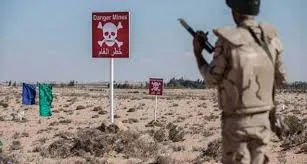
The great Battle of El Alamein during the Second World War left behind an enormous quantity of explosive remnants of war and anti-personnel and anti-tank landmines, scattered over vast tracts of land estimated at approximately 5,000 square kilometres.
For the past 75 years, Egypt has suffered from the problem of landmines and their harmful effects, as they pose a serious threat to human life and to anyone who ventures into those areas, and they deprive Egypt of the benefit of some of its best sites, rich in natural resources such as oil, natural gas and numerous minerals, according to international reports.
Add to this the loss of life these mines have caused to date, with hundreds killed and injured, some of whom have been left with severe disabilities, particularly to their limbs, and deprived of the ability to work, in addition to the high cost of treatment and the psychological and physical toll inflicted on them.
All of this hinders development, whether through the dangers arising from their explosion and their impact on human life and the inability to exploit natural resources, or through the disruption of investment and the loss of new projects.
Egypt has suffered greatly from the refusal of Western countries to disclose information and maps, and from their failure to shoulder their responsibilities for clearing mines from those sites, in addition to other obstacles such as climate change and its effect on shifting sand dunes, the absence of paved roads to the mined areas, and the lack of the financial resources, equipment and electronic devices needed for mine action.
Egypt has continued to strive in its efforts and its demands that the countries which planted those mines assume their responsibilities, while pressing the United Nations to play an active role in urging states to provide financial and technological support for clearing the mines planted on Egyptian soil. The government's efforts with international organizations resulted in the European Union joining the United Nations Development Programme's mine clearance programme with a grant estimated at 4.7 million euros, which contributed to clearing some areas of land in the city of New Alamein and Matrouh Governorate.
The United Nations Resident Coordinator in Egypt praised the cooperation between the European Union and the United Nations Programme, as well as the efforts of the Egyptian Armed Forces in clearing those areas, in addition to the construction of a prosthetic limb centre.
Nevertheless, we believe that those countries must continue to finance and support mine clearance operations in the remaining areas, given their danger and the need for funding, technology, training and awareness.
We also believe that Egypt should prepare an annual report to coincide with the International Day for Mine Awareness and Assistance in Mine Action, set for 4 April each year, announcing what has been achieved in mine clearance and the treatment of the injured, the areas cleared and the cost of clearing them, including the international contributions made at each stage, while commending those efforts as an incentive. It should also announce the estimated cost required for clearance and decontamination operations across all the areas, allowing the various countries to review the matter transparently and determine their responsibility in dealing with this file and the United Nations and international values it embodies for the protection of human rights, whether the right to life or in the field of development. The report should identify the needs required and urge states to consider providing modern electronic equipment, in keeping with the spirit of determination that Egyptians display in completing the country's development plans and their seriousness in making use of the available natural resources. The information available on the website of the State Information Service regarding the landmine problem could also be updated on a regular basis, in order to give a true picture of those efforts and the scale of the problem according to the latest situation.