
Dr. Bahaa Helmy Writes: Surveillance Cameras — Between Security and Regulation
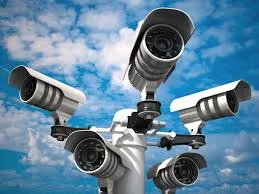
Cameras are one of the advanced means of security technology for surveillance and for recording events. They are spreading everywhere, giving observers continuous monitoring of public places such as major street intersections, banks, facilities and important sites, because of their effectiveness and their role in preventing crime and helping to identify its perpetrators after it has been committed. Artificial intelligence has added new techniques that enable security surveillance cameras to detect wanted persons and criminals even if their faces are not visible to the lens, through extraordinary capabilities in detecting and analyzing body movements, height, width, clothing and so on — a great achievement and an effective technical weapon for arresting criminals and convicts and tracking their movements even if they hide their faces, in addition to their important role in fighting crime and theft. Regardless of the issue of “privacy” that accompanies the development of camera technologies and of the body scanners used at some airports and border crossings in various countries of the world, and which is raised from time to time, the train of artificial intelligence is moving at top speed towards progress and the development of the uses of surveillance cameras by adding new features, such as analyzing video clips and displaying search results while retaining them for future reference or for use in new applications. Facial recognition has begun to be applied in a number of Chinese provinces in preparation for extending it to the whole of China, and new glasses have been devised for security personnel that enable them to read people's data as soon as they pass in front of them in public places such as metro stations, cinemas and theaters, through which it was possible to arrest a number of wanted persons while they were attending a concert. The use of security surveillance cameras has become widespread because of their importance in securing various sites and events such as stadiums and sporting events, and in securing train and metro stations, markets, public shops, traffic and so on, which calls for legal controls to regulate the rules for keeping and circulating the contents and recordings of these cameras, and for preserving the information, clips and pictures that have been recorded. A draft law was previously presented but has not yet been issued; and public, commercial, industrial and tourist establishments and amusement venues within the Cairo Governorate are required to install cameras covering the surrounding area, to record and to retain the recordings under a governorate decision issued in 2016, without specifying the retention period for the recordings or the controls on their circulation, and without specifying who has the authority or the right to view or retain them. This may expose camera recordings of certain crimes or important events to tampering or destruction, which would affect them negatively not only as digital or electronic evidence but would also affect public order and security in society as a whole. Failure to control or regulate the circulation of surveillance camera recordings may lead to misuse, blackmail or the concealment of information. Nor should we forget the incident in which a train locomotive crashed and its fuel tank exploded at the platform of Ramses Station, and the accompanying chaos of publishing clips from the camera recordings without the approval of the investigating or security authorities and without waiting for the results of the investigations, which caused much resentment and anger at the inhumane scenes circulated on electronic communication sites. It is therefore appropriate to lay down legal controls to regulate the retention periods for surveillance camera recordings at important facilities (other than military, security and vital facilities, which have a special nature), as well as surveillance camera recordings at public shops, while separating the handling of recordings that are subject to Public Prosecution investigations into various crimes or incidents — which may be disposed of only by decision of the investigating authority or the competent court — from ordinary routine recordings, until special legislation is issued regulating this matter and specifying the periods and means of retaining recordings, the methods of their circulation and the regulation of the process of erasing them. Facility security in government bodies, public utilities and elsewhere should be responsible for enforcing the instructions and following the rules of information and document security, and should be held accountable in the event of a violation. International and national experience in this matter should be taken into account. The Spanish Sports Law provides that the stadium security director is responsible for retaining the recordings for 28 days unless the court decides otherwise, and the instructions of the Central Bank of Egypt indicate that bank branches retain camera recordings for a period that may reach three months or more. Regulating these matters contributes to putting the situation on a legal footing and achieving the public interest.