
Dr. Bahaa Helmy writes: Terrorism in Sinai, Between Military Defeat and the Survival of Ideology
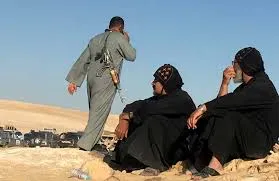
Egypt's determination to liberate Sinai from terrorism and to confront the various ambitions and threats against it is a reflection of the depth of its faith in the military doctrine of "victory or martyrdom." This crystallized in the Comprehensive Operation Sinai 2018, announced last February, which amounted to a declaration of the military defeat of terrorism and of the Islamic State organization (ISIS) in Sinai, despite the financial and logistical support and the continuous protection extended to the terrorists, whether by Qatar and Turkey or by the coalition forces that provide them with protection.
The defeat of terrorism in Sinai carries important indications and signs that point to the depth of the Egyptian people's attachment to their land and homeland, and to the thwarting of the plans of the alliance between the terrorist group and America and the West during the group's rule of Egypt, plans that aimed to hand over the land of Sinai and carry out partition schemes.
The success and cooperation of the Armed Forces, the police and the Egyptian intelligence services in tightening control over smuggling routes, preventing the passage of terrorists, combating the financing of terrorism, and monitoring and exposing the plans of Hamas, which constitutes the military arm of the Muslim Brotherhood, together with the defeat of terrorism in Sinai, are lessons learned that governments and security agencies around the world view with appreciation and respect.
The question arises: does the military defeat of terrorism mean the disappearance of its organizations and ideas? And what of Sinai after the defeat of terrorism?
You may find the answer in reading the history of the Muslim Brotherhood, its thought and principles, and the loyalty of its members, which rests on the member's allegiance to the group rather than to his homeland. Consequently, the military defeat of terrorism does not mean a change in the organization's ideology according to its principles, because ideas do not die with the death of those who hold them. ISIS, or any other terrorist organization, represents the ideology that the terrorist group has held for decades, and its ideas are still alive.
All terrorist organizations, whatever their names, were born from the womb of the Brotherhood, that international organization of terrorism in the world, which relies on clandestine activity, cell-based structures, military wings, the use of violence and going underground. The terrorist group also possesses the ability to change colors, transform itself, deny and deceive in order to achieve its aims and ensure the survival of its ideology, while updating the mechanisms for spreading it among young people and constantly seeking to recruit new members from local populations who may embrace extremist ideas, in order to form military cells to carry out its schemes.
Perhaps we need to create an alternative, with religious thought and content different from what came before, to embrace young people instead of leaving them easy prey to the culture of that group. Confronting this ideology requires engaging with thought, knowledge, education and awareness, because whoever was raised on the principles of the Brotherhood is like an infant who grew up in his mother's arms: he cannot change his thinking even if he changes his skin.
Egypt is going through the most delicate and dangerous stage in its history since the October War of 1973, because the terrorist group planted many of its members and affiliates in state institutions during its period of rule. This has made it easier for terrorists to hide among us, a serious matter that requires everyone's vigilance in reporting to the security authorities in order to protect society and humanity from them.
The unity of the nation, the development and reconstruction of Sinai, and addressing the issues of ignorance, poverty and disease according to a new approach and new thinking based on tolerance, acceptance of the other, and the rejection of the violence and hatred that the terrorist group, its culture and its ideas have sown in that region, as well as elsewhere in some districts and villages of Upper Egypt that still believe in those ideas and rely on customary reconciliation sessions to resolve sectarian problems, outside the framework of the Constitution and the rule of law.
It may be appropriate to create a new economic and social environment in Sinai while encouraging young people to move there and work. All of these are important matters in confronting extremist thought, and they represent enormous challenges that require plans, determination and concerted efforts by the government, civil society and the entire people to accomplish them efficiently and energetically, alongside precise, continuous, round-the-clock monitoring of the movements of terrorist elements, without being deceived by periods of calm, however long they may last. And here the question is asked again: are we all concerned with confronting the ideology of terrorism after its defeat in Sinai?