
Dr. Bahaa Helmy Writes: The European Union and the Illegal Migration Crisis
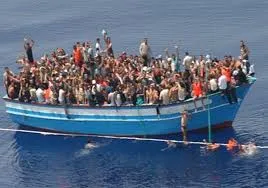
The proceedings of the recent Africa–Europe summit held in Abidjan, Côte d'Ivoire, saw considerable political and media attention and momentum surrounding the problem of illegal migration from Libya to the countries of the European Union.
Officials announced that the European Union, the United Nations and the African Union had agreed on a new plan to confront illegal migration through frameworks and policies different from those used before, based on dismantling human smuggling networks and resettling stranded migrants. The plan also includes the formation of a security force, modelled on United Nations police units, made up of European and African police officers and intelligence personnel, with powers to arrest smugglers once they have been identified, and to combat smuggling networks and their sources of funding, along with freezing assets and imposing sanctions on known smugglers.
This clearly reflects the scale of the crisis facing the countries of the European Union after the failure of their policies to combat illegal migration, which is one of the consequences of instability in Libya. The scene also points to an attempt by the European Union to circumvent the problem and to evade the moral and legal responsibility of European states for hosting refugees and migrants fleeing in search of a better life on the Old Continent, or escaping persecution and violence, in accordance with international law. It is likewise an attempt to evade their responsibility for the war and devastation that befell Libyan society, now that the dangers of illegal migration have reached their own countries, which is what we might call "the spell turning against the sorcerer."
The illegitimate means to which some European countries resorted in combating this phenomenon have also failed, such as financially supporting certain armed groups and militias in Libya and turning a blind eye to their use of violence and killing and their commission of the most heinous crimes against humanity against those migrants, whether on land or at sea.
Consequently, the so-called new plan will be implemented under the umbrella of the United Nations and the European and African Unions, which gives it the form of international legality and allows entry into Libyan territory by UN resolutions whenever European countries face problems. The question arises as to why the United Nations or the European Union has shown no interest in studying effective solutions to the Libyan situation in coordination with neighbouring countries. Why is there no concern for achieving stability, development and democracy, and for building state institutions that can fulfil the aspirations of the Libyan people? Why is the symptom being treated while the disease is left uncured, despite the fact that it is clear and easy to treat through cooperation in combating terrorism, dismantling the militias, curbing the spread of weapons and building national armed forces that safeguard the security of society and its future? It can be said that, although the policies of the European Union countries and others differ, and some of them contradict one another, they all lead to the same results, namely: turning Libya into a security wall defending Europe against illegal migration; damage to Libya's national fabric as a result of resettling those migrants; and the continuation of instability and the deepening of division so as to spread chaos and terrorism in the region. And if the aim is to enter Libya and try to pressure regional allies, or to carve out an active role for themselves in the Libyan scene without cooperating in confronting terrorism, then this is a grave mistake on the part of the European countries, because the danger of terrorism threatens not only neighbouring countries or the countries of the region; its negative effects will extend to the entire world.
Therefore, the European Union and all the countries of the world must look at the problem of illegal migration more deeply and with enlightened thinking in order to uncover the real causes of this phenomenon, rather than merely combating human smuggling gangs or organized crime. African countries must be helped to benefit from their natural resources and to resolve armed conflicts, and arms companies must stop supplying weapons to all the warring parties. And if receiving migrants and refugees is a moral and legal responsibility of the European countries, then bringing about peace and supporting peoples in obtaining their rights to development, education and culture, and spreading the values of tolerance and peace, are a responsibility and an obligation of the developed countries, in addition to being one of the means of protecting national security and the safety of the world's peoples.