
Dr. Bahaa Helmy Writes: The Importance of the Railway Security and Safety System
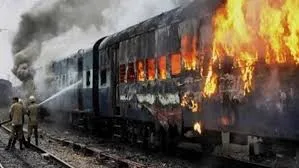
Dr. Bahaa Helmy Writes: In every country of the world, railways are among the most efficient and safest means of transport, as confirmed by American and European statistical studies indicating that the safety factor of railways is about 111 times that of road transport. They are also punctual, comfortable, give passengers room to move, allow easy use of network communications, and their tickets cost less than other means, which attracts travelers because of the savings. The railway is therefore a strategic means of transport for everyone at all times, despite some painful accidents that have claimed dozens of victims. Given this importance, the railway security and safety system comes at the top of work priorities and train-operation requirements, since it represents the protection measures for millions of passengers every day. The system rests on four main pillars: preparing and qualifying the human element; relying on modern technologies; training in evacuation and first-aid plans in emergencies; and raising awareness among all segments of society of safety procedures in accidents and disasters. The human element is the cornerstone of operating the railway and the first safety factor in the security and safety system. This requires re-evaluating all employees involved in operating trains, whether train drivers, assistants, tower or traffic controllers or other jobs affecting train operation, through specialized scientific and medical committees made up of university and military college professors, to determine whether their health and psychological capacities suit the nature of driving and operating trains; and preparing training programs and kits based on modern equipment and training aids that simulate reality, to raise performance and the handling of safety issues to international standards. This should be accompanied by rewarding salaries and incentives for train operators, to overcome young people's reluctance to join this work and to allow future cadres to be prepared. Modern technology is one of the international safety standards on trains, such as signaling and communications systems that regulate train traffic, locate trains and monitor safety indicators while they run, through a network of signals, communication towers, optical fibers and monitoring and control centers at stations. There are also advanced early-warning devices to detect technical and mechanical faults in trains, positive remote control systems using automatic operation and automatic control of train speed or routes to prevent train collisions, and event-recording systems to limit the effect of the human errors that cause accidents. This technology helps reduce accidents, delays and operating costs, increase the capacity of railway lines, and provide security and safety for passengers and all elements of operation. Training in civil protection, evacuation and first-aid plans in emergencies and disasters is one of the main measures for achieving the security and safety system at all strategic, vital and important facilities, especially the railways, in what is known as training on simulated crisis scenarios: training train operators, control and operations rooms and all railway station staff in evacuation plans, defining the role of each person and what must be done during a crisis to protect lives and property, ensuring the efficient and effective use of available means to face risks professionally, and evaluating performance and lessons learned after the exercises. In addition, there are drills to train both staff and the public, at times that allow it, to raise awareness and teach the instructions and methods for treating and evacuating the injured, with these drills documented, as is done with evacuation-plan drills in many schools, universities and some hospitals, banks and others. The fourth pillar relies on raising awareness among all segments of society of safety measures and procedures in accidents and disasters, through continuous awareness campaigns in the media and the distribution of leaflets and visual aids to guide travelers on the procedures to follow. We must agree that preserving the security and safety of travelers is a humanitarian, moral and legal obligation and duty that admits no bargaining or delay. However, during the transitional phase towards achieving the security and safety system in its various elements, it may be considered appropriate to open radio communication channels between locomotive drivers and engineers and those responsible for sending signals, instructions and stations; for the train driver to be accompanied by an assistant and another person responsible for documenting communications on each trip, possibly drawing on private security company personnel for this task for a period until specialized security companies affiliated with the railways can be established to follow up and monitor operations; using event-recording devices inside the locomotive cab; and equipping carriages with microphones to broadcast the necessary instructions to passengers throughout the journey.