
Dr. Bahaa Helmy Writes: The Pillars and Axes of the Nation-State
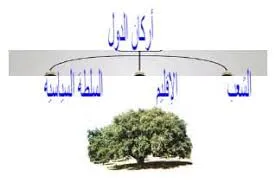
It is well established that the legal definition of the state rests on three pillars: the people, the territory and authority — that is, the people, the land and the government.
Some have argued that the state has four pillars: arms, money, organization and ideas. This means possessing military power for protection; money to meet the needs of economic development and secure the people's satisfaction; organization for work, efficient performance and the elimination of bureaucratic problems; while the fourth pillar consists of unity around the identity of the community and harmony between the ideas of the elites and those of the masses, so as to ensure the cohesion of the national community.
The reality, however, is that the pillars of the state, whether three or four, have not prevented the collapse and fall of some states, the displacement of their citizens, the partition of their territory, the plundering of their resources, the erasure of their history and the settling of terrorists within them, with the aim of continuing to drain their capabilities and ensuring that those states never return to their natural condition, standing and original identity — so long as strong measures have not been taken to preserve the cohesion of the state and its pillars.
We have seen peoples divided along religious, sectarian or ethnic lines, with dissension, conflict and wars stirred up between the various sects and groups, paving the way for geographic partition, with a sphere of influence defined for each faction or group in order to entrench division. Banners multiply and authorities disintegrate, so that all the warring parties contribute to achieving the goals that hasten the destruction of the homeland.
From this it becomes clear that the state and its pillars can only be protected through key axes. The first is not to be content with the mere existence of an army, but to build a strong, modern national army with a high level of competence and fighting spirit and morale, rooted in belonging and loyalty to the homeland and in protecting the people. The second is strengthening state institutions and enhancing services to citizens. The third is preserving the cohesion and solidarity of the home front and the unity of the people's sects and sons and daughters under a single slogan and substance — "one hand." We may call these axes "the fundamentals for preserving the nation-state."
What Iraq faced over the years before succeeding in restoring the form of the state, and what Syria, Yemen and Libya are going through in terms of wars, conflicts, terrorism and the targeting of their sources of strength, is the best proof of the importance of reinforcing the axes that preserve the pillars of the state. Quite simply, if all or any of these axes fall or are disrupted, this acts as a green light and prepares the ground for carrying out plans to destroy a given state by targeting its military power, embodied in the army, targeting state institutions, sowing discord and stirring up conflicts so that its pillars collapse and its peoples are scattered, while putting in place mechanisms to thwart attempts to gather the fragments under a single national authority. Consequently, the last resort becomes partition and permanent hostility between those parts.
That is why we see Egypt's firm commitment and keen insistence on declaring its steadfast position on every official and friendly occasion; indeed, it has become a declared general principle of Egypt's policy: not to undermine the institutions of states, to preserve their unity and their armies, to refrain from resorting to force, and to rely on political solutions in accordance with the national will, as this is the real guarantee against collapse and against killing the future in the eyes of the peoples of the targeted states. This is what Egypt always takes care to affirm at all levels, including at home, relying on the awareness and patriotism of Egyptians.
The unity of the Egyptian people, with all its sects, groups and sons and daughters, including members of the Armed Forces and the men of the police, standing as one, constitutes the striking force, the defensive wall and the front of deterrence against anyone who attempts or maneuvers to undermine the entity of the state and its pillars — "the people, the land and authority." Add to that its airspace, so that the pillars of the state become four, together with adherence to the fundamentals for preserving the nation-state, which rest on three key axes: building a modern national army; supporting and consolidating state institutions while providing good services to citizens; and societal and popular cohesion around deep-rooted national values.