
Dr. Bahaa Helmy Writes: The Significance of Qatar's Participation in the Arab Summit
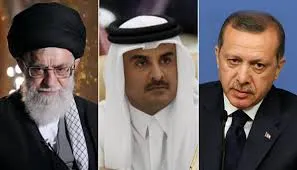
Leaving aside the sea and depths of politics, the participation of the Emir of Qatar in the opening of the 30th Arab Summit, held in Tunis at the beginning of this week, and his departure after about thirty minutes, is a matter that draws attention and raises questions about the significance of that presence and absence at the same time. The Emir of Qatar left the opening session of the Arab Summit during the speech of the Secretary-General of the League of Arab States, which followed the speeches of King Salman bin Abdulaziz, King of Saudi Arabia and chair of the previous summit, and of Tunisian President Beji Caid Essebsi, who took over the chairmanship of the Arab Summit during it – and from there he left Tunisia. Those speeches contained indicators of the Arab consensus, which rejected the American declaration on the occupied Golan despite Syria's absence from the summit; put the Palestinian cause back on the table after US President Trump's decision to recognize Jerusalem as the capital of Israel and the stalemate that has gripped the two-state solution; rejected terrorism in all its forms and manifestations and the means of financing and supporting it, whether in the form of terrorist groups or sectarian militias; and categorically rejected the interference of Turkey and Iran in the affairs of Arab states and the worsening and complication of crises resulting from the two countries' destructive policies in the region, with an explicit condemnation and denunciation of Iran's aggressive policies, calling on the international community to shoulder its responsibilities in confronting its policies and to stop the Iranian regime's support for terrorism in the world. These topics were on the summit's agenda alongside other topics such as the situation in Libya and Yemen, support for Sudan and others. Meanwhile, the principles of the Arab consensus conflict with the orientations and policies of Qatar, which involve strengthening relations with both Iran and Turkey and becoming entangled with them in a policy of hostility and ambitions in the Arab region; Qatar has chosen to take part in supporting the schemes that target Arab rights and to sing outside the flock and break with the Arab consensus, thereby earning more isolation and marginalization as a result of the Arab boycott imposed on it until it abandons its hostile policies, stops interfering in the affairs of Arab states and targeting nation-states with chaos, and stops sponsoring and supporting terrorism. Qatar's presence at the latest Arab Summit in Tunis therefore came as an attempt to break out of its isolation, and to capitalize on its participation in the Arab Economic Summit held in Beirut last January, when many Arab leaders sent apologies, to strengthen its position. But the Arab consensus was firm and clear in defining its position rejecting the policies and ambitions of the Qatar–Iran alliance. This led the Emir of Qatar to leave quickly, because of his belief in and alignment with the other side, which is a source of threat to the safety and stability of the Arab states and region, and to score new points to strengthen his ties with Iran and Turkey, believing them to be his refuge and shelter. Moreover, Qatar has tried to exploit its walkout from the Arab Summit to appear to the world as rejecting the policies of the League of Arab States and joint Arab action, and as continuing on the path of supporting terrorism and bending its policy to carry out the schemes of chaos and division that target the whole region. In truth, some had pinned their hopes on clearing the air between Qatar and the Arab family at this summit, through Qatar adopting the principles of international peace and security, abandoning its previous policies, genuinely seeking to return to its roots and surroundings, and cooperating with the Arab states in facing the challenges confronting the region. But its actions and policies show its insistence and determination to continue its position outside the Arab consensus and to bargain over the constants of Arab rights, which poses a great danger to the Middle East and the Arab world as a whole. Qatar must therefore reconsider and develop a deeper vision of its role and the future of its regime, for it has no future except by engaging with its Arab surroundings and sharing in their ambitions and hopes.