
Dr. Bahaa Helmy Writes: The Use of Drones in Police Operations
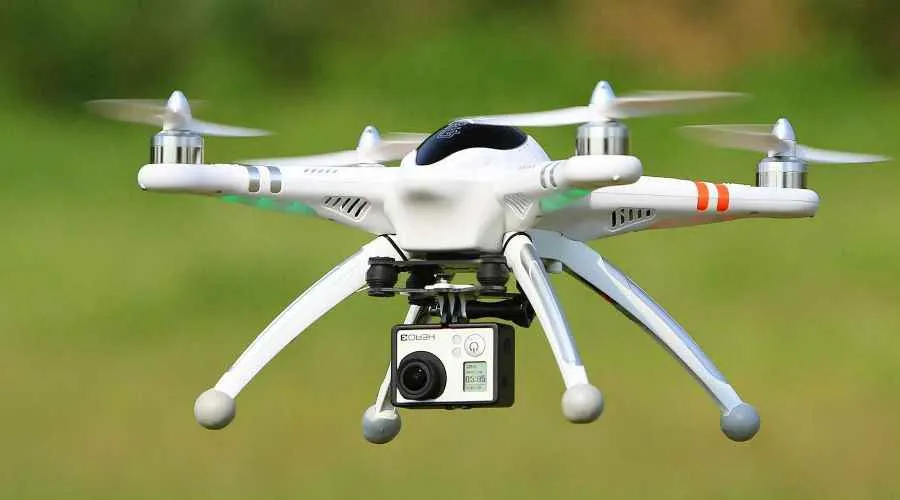
Drones (plural of drone) are unmanned aerial vehicles whose use has spread to all areas of life according to their size, equipment and purpose; they are flying robots, a product of artificial intelligence.
Drones have become one of the effective means in the field of security and safety for protecting citizens, which is the subject of our article. Apart from military or other war uses.
They are used in filming films, concerts and matches and in ambulance, firefighting and rescue services. They are also used during crises in infected areas, in places of water pollution or at gas-leak sites, and the large sizes are used to transport people and carry parcels and aid in natural disaster areas instead of air police helicopters.
Traditional air police rely mainly on helicopters, but what is new is the trend of the civil police in most countries of the world towards relying on drones in their operations to combat crime and replace helicopters in the air police, because of these robots’ technological and logistical capabilities and to save costs and rationalize the size of forces and equipment.
In Germany, drones are used in operations to combat corona and to follow and monitor areas and parks inside cities to detect any violations, and some are fitted with loudspeakers to help and direct police forces working on the ground, such as patrols and emergency units, in following up the application of social isolation decisions.
The Spanish police use them to detect drug-transport crimes, monitor bodies of water and detect violations. The UAE police rely on them to support security operations, rapid intervention, filming, strengthening communications, following traffic conditions, rescue operations and following events and sporting occasions.
Oman uses them to monitor gatherings to warn against infection from the spread of “COVID-19”, and the British police rely on drones for security reconnaissance and monitoring gatherings and protests, as well as following the security situation.
Police forces in many American cities use them to monitor construction operations and for reconnaissance and to relay events as they happen to operations rooms to follow the security situation, and air police aircraft have been completely replaced with drones in some other cities in California. The use of these robots is expected to increase in many other tasks
Data from the US Federal Aviation Administration indicate that 3,100 commercial permits were issued for unmanned aircraft in the fields of infrastructure, agriculture and transport in 50 states.
And that the value of the commercial drone market exceeded 127 billion dollars in 2016. This is because they are easy to use and reduce reliance on the human element – with the press of a button a drone can be moved or sent to the specified site at the lowest cost, since they save millions of pounds that used to be spent on helicopters, pilots, maintenance costs and flight hours to carry out air police work.
In addition, the use of these robots to monitor roads, vehicles and other things can be carried out automatically.
Hence the need of the Egyptian police for drones emerges, because of their effectiveness, efficiency, ease of use and other advantages, to increase the police’s capabilities in confronting the development of crime, provided that they are used and operated according to special legal and security rules and controls to protect national security and preserve the confidentiality of information and privacy.
The use of drones in police operations will reflect positively on the security situation and on the application of the rule of law throughout the country, and will reduce crime, with the possibility of carrying out additional tasks beyond those mentioned, such as following up the securing of important facilities, tourist and archaeological areas and tourist ships, detecting encroachments on state land and following up the execution of removals, detecting the cultivation and smuggling of drugs, following and monitoring traffic conditions and other security tasks.
Through coordination, operations rooms and the specialized police forces, each in its field; the use of drones also increases the speed of response, rationalizes the size of forces, saves costs and frees up the time needed to train the human element to raise efficiency and skill. With the possibility of enacting legislation regulating the work of artificial intelligence robots in the civil police as a future vision for developing security performance, in a way that complements the achievements Egypt is realizing around the clock in all fields