
Dr. Bahaa Helmy Writes: The World Awakens to the Importance of Combating Terrorist Financing
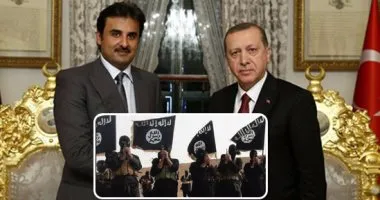
The adoption at the end of last March of the first Security Council resolution on combating the crimes of terrorist financing, proposed by France and supported by Egypt, is an important step in confronting the states and bodies that support terrorism. Egypt's success in adopting a comprehensive vision and strategy to confront terrorism, including combating the means of financing and supporting it and providing its tools to the various terrorist organizations, and its insistence on dealing sharply and firmly with terrorist states and entities that use governmental organizations, charitable civil institutions and relief organizations as a front to collect donations for terrorist purposes, opened the door for the world's states to take notice and assume their responsibility for reviewing the UN texts established to confront the danger of terrorist financing in its various forms, as it is one of the most important tools that allow terrorism to maintain its presence and influence. This is an achievement both in highlighting the importance of exposing the means and forms of supporting and financing terrorism and in shining a light on the states that finance terrorism, while creating an international legal horizon for holding to account those who finance terrorist organizations. There are already a number of UN conventions that recognize the importance of combating money laundering and terrorist financing, such as the Convention against Illicit Traffic in Narcotic Drugs, the Convention against Transnational Organized Crime, the Convention for the Suppression of the Financing of Terrorism, the Convention against Corruption and others. And although the means and forms of terrorist financing resemble money-laundering operations, in that each can be committed by organized criminal groups or by natural persons or governmental or civil organizations, terrorist-financing crimes pose a greater danger because they give their activity an ideological, intellectual or cultural character to justify their acts. Some of them are also marked by the ease and speed of transferring funds when the amounts are modest or sent by natural persons, and their danger grows because they are carried out by every means, whether with legitimate or illegitimate funds, and whether internationally across borders or through national or foreign persons or civil institutions. There is no doubt that a Security Council resolution bringing all the standards together in a single text, in a different way, gives member states a new dimension by creating room to set new national controls to monitor the aid and donations received by charitable organizations and institutions and relief organizations. It also constitutes a new obligation on member states, since the resolution was adopted under Chapter VII of the Charter of the United Nations, which gives it binding legal force requiring states to enact national laws establishing criminal offenses and penalties against any person or body that uses funds, directly or indirectly, to finance terrorism, together with the obligation to take many other measures, such as lifting the secrecy of transfers and monitoring payments made by electronic and other means; activating international mechanisms to combat terrorist financing and dry up its sources; strengthening international coordination and cooperation in confronting organized crime and combating money laundering and terrorist financing; and regional and international cooperation to implement effective and innovative plans and methods suited to the evolution of crime and keeping pace with terrorist organizations' use of modern technology in their operations. The resolution also gives the right to ask the Security Council to take legal measures under the provisions of Chapter VII against any state or body that uses funds, directly or indirectly, to finance terrorism.