
Dr. Bahaa Helmy Writes: Trump's Promises... Between the Concept of Deals and Negotiation Strategies
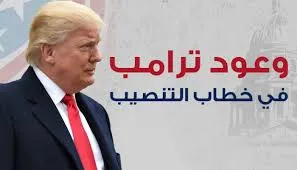
During his election campaign, US President Trump promised to change many of the policies of the American administration under his predecessor Obama. He was bold and clear in making his campaign promises two years ago. Among them were his criticism of the Iran agreement, which he described as a bad deal, and his promise not to certify it; his criticism of the North Atlantic Treaty Organization, declaring that the countries of the European Union must shoulder their responsibility and pay the costs instead of the United States; restricting travel to the United States by nationals of certain Muslim countries; his announcement that he would confront the problem of immigration from Mexico by building a separation wall; his call for a review of the free trade agreements between the United States, Canada and Mexico; his decision that he would recognize Jerusalem as the capital of Israel; his promise that the Gulf states would bear the expenses and cost of establishing a safe zone in Syria, in addition to paying the price of the protection and assistance the United States provides them, which, in his words, is a high price that the rich Gulf states must pay; and other promises, both international and domestic, such as the pledge to help Egypt in its war against terrorism and the repeal of the health insurance law (Obamacare)..
The US President may well have fulfilled many of the campaign promises he made, regardless of their legitimacy or the conflict of some of them with the resolutions of the Security Council and the United Nations, such as the question of Jerusalem and moving the US embassy there. However, he has failed on a few of his declared promises, such as his promise to help Egypt in its war against terrorism; instead of helping it, the military aid allocated to it was cut.
Perhaps, had there been strong civil society organizations in Egypt capable of speaking to the West in the same language and with the same attention on all the issues raised, especially in the field of human rights, rather than leaving the field to organizations backed by the terrorist group, the results would naturally have been different from what they are now, particularly regarding the human rights file, and the burden would have been eased on the government, which takes on the defense of human rights at the political and legal levels and before international organizations. This calls for a greater role for Egyptian soft power. Even so, this does not absolve the US President of his responsibility to halt the hostile policies and the funding of the schemes that targeted Egypt after the Arab Spring failed to achieve any of them.
Looking at the US President's promises, their economic background becomes apparent, based on the concept of the deal and consistent with what he announced in December 2017 under the name of the US National Security Strategy, in which he stressed the fulfillment of his promises so that America would become "great again" and be "America First".
Opinions have varied and the views of international parties have differed regarding the statements, decisions and announcements issued by the US President, all of which aim to obtain the largest possible amount of money to finance the American economy, even if it comes from its closest traditional allies.
Some analysts have gone so far as to say that American policies under Trump lack clarity. The truth is that Trump's strategy and policies have brought billions of dollars into the American economy, and these inflows to American companies are expected to increase, whether from the oil-rich Gulf states or through achieving the best position for American companies' investments, in light of Europe's and Iran's yielding to the American demand in exchange for preserving European investments exceeding 20 billion dollars, and because of the interconnection of the European banking system with its American counterpart.
Here the question arises as to what types of strategies the US President follows in negotiation by announcing his demands. Is it the hardline strategy, which comprises high, uncompromising demands and proposals with the insistence that they may not be conceded? Or is it the fait accompli strategy, which places the other party before a fait accompli and informs it that it may take it or leave it without discussion? Or is it another of the negotiation strategies used in international trade? On the other hand, a question arises about the efficiency of the executive tactics and negotiation skills employed by the US President, which have achieved a large part of the objectives and economic returns for his country, even though some countries, such as China, regard certain statements made by the US President as blackmail. Certainly, every country seeks to achieve its interests according to its potential, capabilities, policies and the negotiation skills that qualify it to maintain a degree of strategic balance at the international level.