
Dr. Bahaa Helmy Writes: Using Social Media While Driving — An Imminent Danger (Part 2)
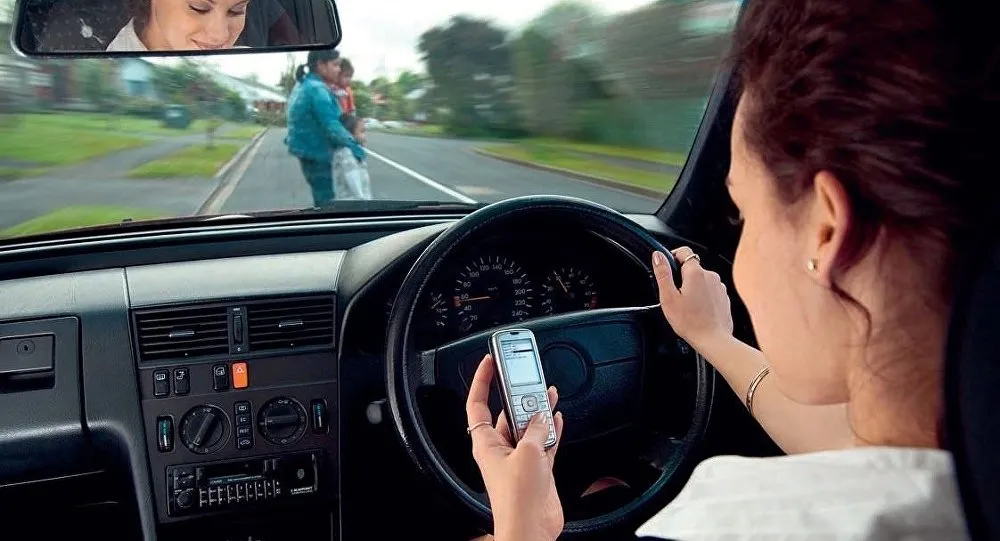
Using a mobile phone while driving slows reactions (especially the reaction in using the brakes, as well as the reaction to traffic signals) and impairs the ability to stay in the correct lane and to keep a safe distance between cars. Add to this that phones that can be used without holding them in the hand are no safer than hand-held mobile phones, and that writing text messages greatly increases the risk of accidents. The state has made great efforts in the field of roads and safety rules, as safe infrastructure, besides the importance of these roads for investment, and has equipped them with sidewalks, dedicated lanes for cyclists and motorcyclists, safe crossing points, speed management on the roads, signage, parking areas and other measures. We must acknowledge our responsibility as individuals and as drivers for our commitment not to use mobile phones to talk or to deal with social media sites while driving, since this is an imminent danger. We cannot rely on, or throw the burden onto, the law enforcement forces and the traffic police to control these matters without every vehicle driver defining and shouldering his responsibilities, duties and conduct and committing to the rule of law and the regulating rules in order to preserve his own life and the lives of others. The causes of the traffic problem, which grows more complex in Egypt year after year, are well known; traffic cannot be regulated by relying on the human element being present at every site or traffic light, or [given] the lack of space to stop at the side of the road to use the phone, for example — and this does not exempt the authorities competent to regulate traffic from their responsibility. But the various countries of the world rely on electronic signals or aerial surveillance, and on the culture of citizens and their degree of awareness of responsibility and of the risks to which pedestrians and drivers alike may be exposed in the event of a violation; and the management of traffic systems relies on cameras linked to nationwide control and tracking systems, which is currently being implemented in some Egyptian districts and cities. The danger of using a mobile phone while driving is clear, as is the importance of reaching the best solutions to treat such growing negative phenomena in light of the enormous technological development in communications and connectivity, which has many positives and negatives alike, requiring that lessons be drawn from experience to treat the acquired negative effects and habits while maximizing the positives. The solution to this phenomenon can rest on three main axes in parallel. The first axis is to re-issue stricter legislation on the errors of the human element, in particular using a mobile phone without a remotely connected earpiece, in addition to other violations relating to speeding and so on, in order to limit and eliminate this phenomenon and its dangers and to move forward in reducing accident rates in Egypt. The second axis is the importance of conducting scientific field studies by unifying the efforts of the bodies concerned, such as “the Central Agency for Public Mobilization and Statistics, Public Security, Traffic and Civil Status, and the Ministry of Health”, and any other bodies that may be added, in order to survey and identify the most common human errors in driving cars and to establish the frameworks and measures needed to treat them; the efforts of some international organizations may be drawn on to support such studies financially and technically, saving time and expense, in keeping with science and Egypt's future vision and in line with the public interest and national security. The third axis is the role of the media in shaping and developing the awareness of citizens, drivers and pedestrians of traffic safety rules, how to deal with traffic signals and with traffic calming near schools, hospitals and various gatherings, traffic lanes, ambulances, fire engines and rescue vehicles, cases of evacuating roads and bridges, and other means of security and safety, in coordination with the ministries concerned, to spread this awareness in order to entrench the culture of the rule of law and knowledge of duties and rights, starting from school and university, youth centers, clubs and places of worship, and to spread this culture on electronic communication sites, showing examples of the personal errors committed by drivers and comparing them with examples of the positive and correct behavior that should be followed or adopted, to achieve the greatest possible benefit