
Dr. Bahaa Helmy Writes: Volunteer Civil Protection Teams, a Culture or a Necessity?
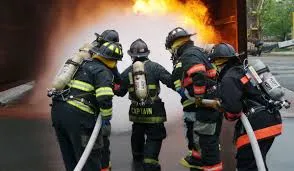
Visions for the Future, 23/8/2018 Volunteer Civil Protection Teams: A Culture or a Necessity? Volunteer work is a mark of civilization and a positive form of community participation. It also promotes cooperation and development and helps provide services alongside government institutions, in line with scientific principles and established operating methods, to achieve the best possible results. Volunteer work is regarded as a refined human practice of inner values and motives that encourage human interaction, a love of life, and hope and confidence in the future, since it is a self-driven humanitarian act motivated by the love of giving, helping others and serving society as a whole. Developed countries pay great attention to volunteer work, setting curricula and study programmes aimed at instilling a culture of volunteering and giving among pupils, students and learners at the various stages of education, as in Britain. They take care to develop and diversify volunteering programmes and fields to suit study schedules, holidays and the working hours of different jobs, and they establish systems for volunteer work and the number of volunteer hours per week, month or year, according to scientific planning and a civilized approach imbued with a humanitarian spirit, expecting nothing in return other than fulfilling one's desire, gaining inner satisfaction and performing this duty. On the other hand, volunteer work can be in any field, but volunteering in the field of confronting challenges and disasters is distinguished by the fact that it helps institutions deliver their services and work, whether in fighting fires or in responding to natural disasters or major accidents, by carrying out firefighting, civil defence and ambulance work to save lives, limit human losses and ease the impact on residents of areas going through such crises. Volunteer work saves a great deal of money, in addition to contributing to raising awareness and educating many people about the procedures to be followed at such times and the need to comply with the authorities' instructions to ensure security and safety. Many countries rely on volunteers in numerous fields, most notably volunteer firefighting, as in the United States, where qualified volunteer firefighters account for about 70% of the total personnel in this service. In view of the increasing number and scale of natural and man-made disasters striking various countries of the world in light of climate change, or as a result of incidents whose occurrence cannot be avoided, such as earthquakes, flash floods, volcanoes and rising sea levels, or accidents involving various means of transport and large-scale fires such as those witnessed in Greece, with the heavy human and material losses that resulted, this gives governments an indication of the importance of preparedness and of training volunteers to assist the authorities in confronting such disasters. We often sense citizens' desire to help with firefighting, rescue or ambulance work, yet their movements and actions may hinder the efforts of the competent response agencies, thereby affecting the efficiency and speed of their performance, or cause disorder and unjustified crowding that may expose them to serious dangers during operations. This is due to citizens' lack of familiarity with the proper rules of conduct in such situations, in addition to their unfamiliarity with the culture of volunteer work and their lack of training in how to deal with such operations. In light of benefiting from the experiences of various countries and the human resources currently available in the national institutions responsible for confronting such disasters, and given the increase in population, urban and geographic expansion, industrial, labour and student activities, and the growing number of economic and commercial companies, important and public facilities, residential buildings and new urban communities, the question arises as to whether the time has come to spread the culture of volunteer work through curricula and study programmes for pupils. And whether it is necessary to form teams of qualified volunteer firefighters, rescuers and paramedics in the governorates, districts and cities, according to a dedicated information system, to assist and cooperate in times of need, in addition to what this would achieve in improving the relationship with those institutions, developing the spirit of community participation in various fields, and harnessing national spirit to strengthen cohesion and fraternity among members of society.