
Egypt Sets New Standards for Human Rights in Prisons
Dr. Bahaa Helmy Writes:
Egypt is moving at a rapid pace towards completing the elements of the New Republic. Every day it reveals to us the opening of a giant national project not announced before, or the launch of a new presidential initiative in the field of health, social, educational, cultural or sports care.
The number of presidential initiatives has exceeded 43, at an initial cost of more than 620 billion pounds, not counting infrastructure and digital projects, the development of education, the localization of industry, tourism, antiquities and other fields, with the aim of providing a decent life for the Egyptian person and future generations, in fulfilment of the slogan “Raise your head high, you are Egyptian”.
The political leadership’s faith and determination to confront the causes of poverty, ignorance and disease in order to build an Egyptian person who enjoys health and possesses will, a spirit of belonging to the homeland and citizenship and the drive to work and produce, is clear in all the work being done on the soil of the homeland, which is distinguished by being carried out according to the latest the world has reached in terms of efficiency and reliance on modern technology, and by qualifying the human element to provide the best service to the citizen, in a scene that embodies the finest meanings and concepts of human rights.
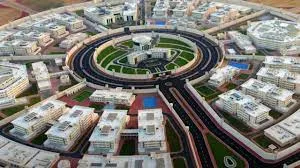
A few days ago, the largest rehabilitation and reform centre in the world was opened and put into operation in Wadi El-Natrun and the Badr area, not only in terms of area or buildings, which include decent places for inmates to live, medical centres for treatment, centres for vocational rehabilitation and the honing of their manual, manufacturing and production skills, and allocating places for visits and others for practising sport, halls and libraries, and learning what is going on in the various media.
Rather, each centre includes a court complex, in addition to modern programmes for qualifying detainees to integrate into society.
This transformation in the treatment of prisoners achieves many goals, foremost among them the application of the highest standards of human rights on the ground, in addition to achieving many other security goals and protecting society.
Holding trials inside these centres also saves the burdens and requirements of securing the transport of defendants from places of detention to courts in the middle of cities and back, achieving safety and saving the financial cost required for this; moreover, moving prisons out of populated areas to areas suited to the nature of the required security and providing spaces for good ventilation and the practice of various activities has become a necessity.
There is no doubt that this attention and transformation towards treating prison inmates in a way that preserves and safeguards human dignity and respects their rights, beginning with changing the name of the prison and correcting its concept to a rehabilitation and reform centre, is unprecedented at the national or global level.
The Standard Minimum Rules for the Treatment of Prisoners, “Geneva” 1955, the Basic Principles adopted by the General Assembly in December 1990, and the documents issued by the High Commissioner for Human Rights regarding prisoners did not set a model system for the treatment of prisoners and the management of prisons; rather, they called for setting the best principles for treating them and were content with setting general frameworks, such as non-discrimination, cleanliness of the place, providing treatment, freedom of worship, sport and cultural activities, and teaching them crafts, work and production, among other principles, while acknowledging that these rules are not intended to set a model prison system.
If we look at human rights in the Guantanamo detention camp, for example, and the new rehabilitation and reform centres in Egypt, we find that the latter have presented a unique model of the concept of inmates’ rights and the goals of penal policy, placing Egypt at the top of the list of countries that care for human rights in this respect.
A number of members of the diplomatic corps, human rights organizations and foreign and national media visited those centres, expressing their great admiration, and their questions were raised about how these centres were completed so quickly and in the refined manner in which they appeared, and their use of interrogatives multiplied (where, how and when was it done)?
It is an occasion to invite the head and members of the UN High Commissioner for Human Rights and the other regional organizations to visit the Egyptian rehabilitation centres, with the possibility of offering grants and exchanging visits to train and qualify foreigners working in this field, especially Africans, at the sites of those centres, so that it is a field study on the ground, while calling for the Egyptian standards in penal institutions to be regarded as new global standards to be followed in the field of human rights.