
#Foreign Ministry Notarization Services… Problems and Solutions#
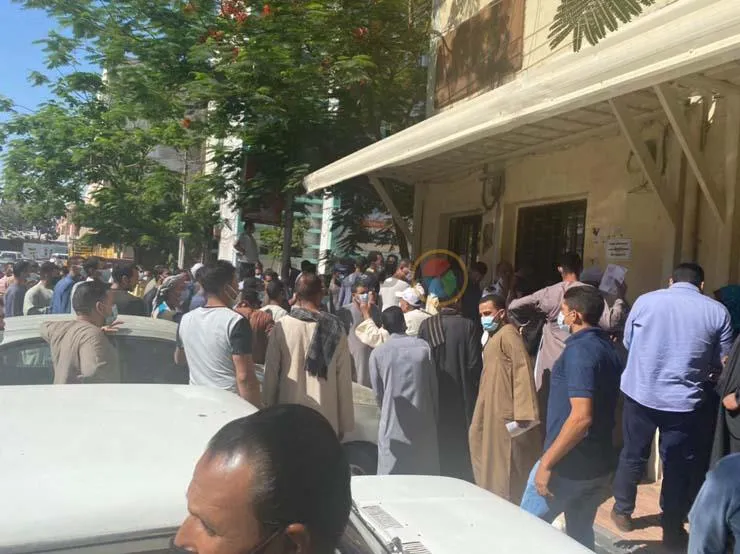
The Foreign Ministry notarization offices are witnessing unprecedented crowding by citizens seeking to authenticate papers, documents or general secondary certificates, contracts and powers of attorney, in addition to the documents of Egyptians abroad, which has made it almost impossible for any citizen to complete the required service.
For example, many citizens coming from various parts of the Republic go to the Foreign Ministry notarization office at Merryland in Heliopolis at twelve midnight to reserve a place in a handwritten list made by one of the service seekers, and stay all night until the office opens in the hope of finishing their business.
There are also many service seekers who go every day to register their turn to obtain the required authentication of their papers the following day, but to no avail, because working hours end before their turn comes; and there are many elderly people with children abroad who are at a loss as to how to break through the heavy crowding in the street outside the office in the hope of getting inside?.
Some of them shelter under a tree that protects them from the sun, some bring a chair with them, and some sit on the pavement, since the office’s instructions are not to differentiate between service seekers.
Every morning police officers arrive and take up position outside the iron gates of the site, and make efforts to open a passage through the crowds for those whose names are called, while the office manager and his staff wash their hands of organizing the daily work, their role being limited to closing the doors when there is crowding at the outer gate and stopping accepting citizens’ applications as a punishment for their disorder.
So everyone leaves, especially those whose turn does not come, in sorrow, wondering why performance at the Foreign Ministry notarization offices has not been developed and why they continue to rely on a list outside the office in which citizens write their names.
The truth is that the Ministry of Foreign Affairs is a pioneer and excellent in its work at all levels, which raises the question of how far the consular affairs department follows up the branches of its offices that provide their services for fees to citizens, foreigners, those residing abroad, companies, students and other service seekers.
Unfortunately there is no waiting area; the site is surrounded on the outside, and the service windows on the inside, by double iron bars; there are no toilets for citizens and no electronic services, and the place is not fit for providing notarization services to citizens.
Why has there been no digital transformation and electronic booking of appointments to receive the service, as with real estate registry services, for example, with appointments allocated for urgent cases in return for additional fees?
Why have these offices not been developed and expanded in a way that befits and matches the finest sites, as the face of the Ministry of Foreign Affairs inside the Republic, and in proportion to the number of people dealing with them, especially at peak times and particularly after the general secondary results are announced, from the revenues and fees they collect?
The matter needs follow-up and a field inspection to evaluate the level of service and learn about the problems and suffering of citizens in obtaining the Foreign Ministry authentication stamp.
One citizen says that he resorted to an arrangement with another citizen who would be at the site outside the office at night to reserve his turn the next day, on the basis of mutual benefit, with the latter registering the former’s name in the queue list in return for paying a sum of money for this service, outside the scope of the office staff and during their rest hours.
Indifference to improving the services of the Foreign Ministry notarization offices inside the Republic opens the door for citizens to deal by unbecoming methods to register their turn among the first fifty or hundred to ensure that their business is completed; it also invites some opportunists to make a profession of writing in the queue list in the street outside the office at night, collecting the usual fee for writing the names of service seekers in a list they have fabricated.
We appeal to the officials of consular affairs at the Ministry of Foreign Affairs to solve these problems and to allocate a window for the elderly and people of determination to complete their business quickly instead of the daily suffering they go through, and we are confident of attention to this matter in the service of Egyptians at home and abroad.