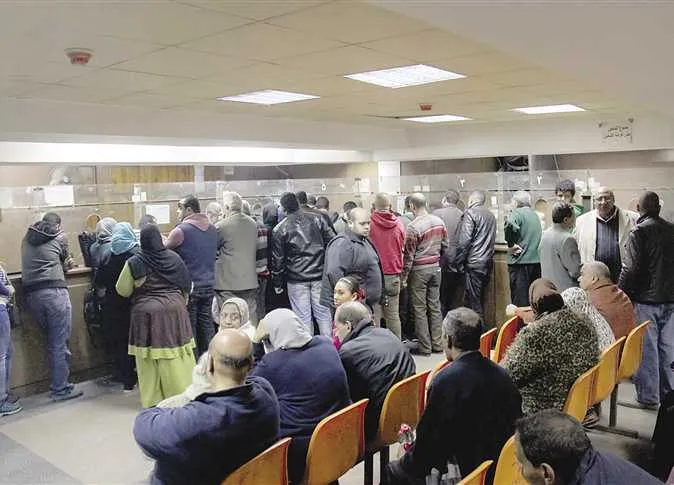
When a citizen wants to build a house, extend a utility, obtain a licence or fill a hole in front of his home, he does not go to the ministry or the Council of Ministers, but to the district or the local unit; there the image of the state takes shape in his mind, “just or arbitrary, present or absent, honest or corrupt”, and that is why the crisis of local government is not a marginal administrative matter but a crisis of trust in the state itself.
The “one-stop shop” was created to shorten the citizen’s errand, and it is a commendable step, but whoever hands in his papers at this window soon discovers that behind it are closed doors and isolated departments, and that a letter separated from its destination by nothing but a wall may take a week to arrive.
So the façade turned into new decoration on an old administration, and the reform remained cosmetic because it did not touch those who hold the keys; and delay is not always innocent, for artificial slowness is the most fertile environment for extorting people, as the citizen pays the price of “facilitation” in time or money.
These bodies hold people’s vital interests in their hands: utilities, licences, building, digging and filling, building violations, garages and so on; and the wider the authority and the more absent the oversight, the wider the door to abuse; and when the citizen finds no clear standard by which to know his right and the time it will take to complete his request, procedures turn from a guaranteed right into a service granted through connections or for a price. ## We do not deny that local government has honest employees who work faithfully in difficult conditions, but the absence of a system wrongs them too, putting them in the same basket as those who have done wrong.
The heart of the problem begins at the local top: how are the leaders and district heads chosen, those who bolt their doors against citizens who have rights? What are the declared criteria? Where are the qualification, testing, field follow-up and periodic evaluation? When criteria are absent, closeness and relationships take their place, the post becomes a reward rather than a responsibility, and the result is leaders who understand neither the meaning of the state nor the meaning of serving the citizen, and who treat the person in need as an applicant rather than as the holder of a right; and a leader who was not chosen on merit has no moral authority over his subordinates, so discipline collapses from the top.
The citizen pays the price first, with his time, his money and his trust, and the state pays it second: the hard-working governor is held accountable before the people for what is done by a subordinate he does not know, and the government that works hard is credited with the image of the corrupt or bribe-taking employee. Thus a local administrative defect turns into a political and moral burden on the whole state.
And the citizen in this equation always complies: he pays the fees and fines and completes every paper and every stamp, and this is the state’s undisputed right; but the social contract has another side, “the citizen’s right to a service with a fixed duration, clear procedures and free of begging:
So how long will the citizen keep doing everything required of him, and then obtain what is his only after hardship or an illegitimate payment?
Reform is possible, and it begins with clear steps: real automation that links the one-stop shop to the workflow behind it and allows the citizen to track his request and know with whom it was delayed; binding legal deadlines for every procedure, with disciplinary accountability for unjustified delay; independent and surprise oversight and a complaint mechanism that protects the complainant from retaliation; declared criteria for selecting leaders based on qualification, periodic evaluation and integrity standards; fair wages for employees, for a weak salary combined with wide authority is a well-known recipe for corruption; and an effective oversight role for local councils.
The state is measured by the citizen by the office nearest to him, and if we want a state people can trust, it is not enough to change the façade and leave what lies behind the doors, for reforming local government is reforming the image, prestige and justice of the state in the eyes of those it serves.
