
The Jews and Morocco… A Hidden Card That Prevents the Fall;
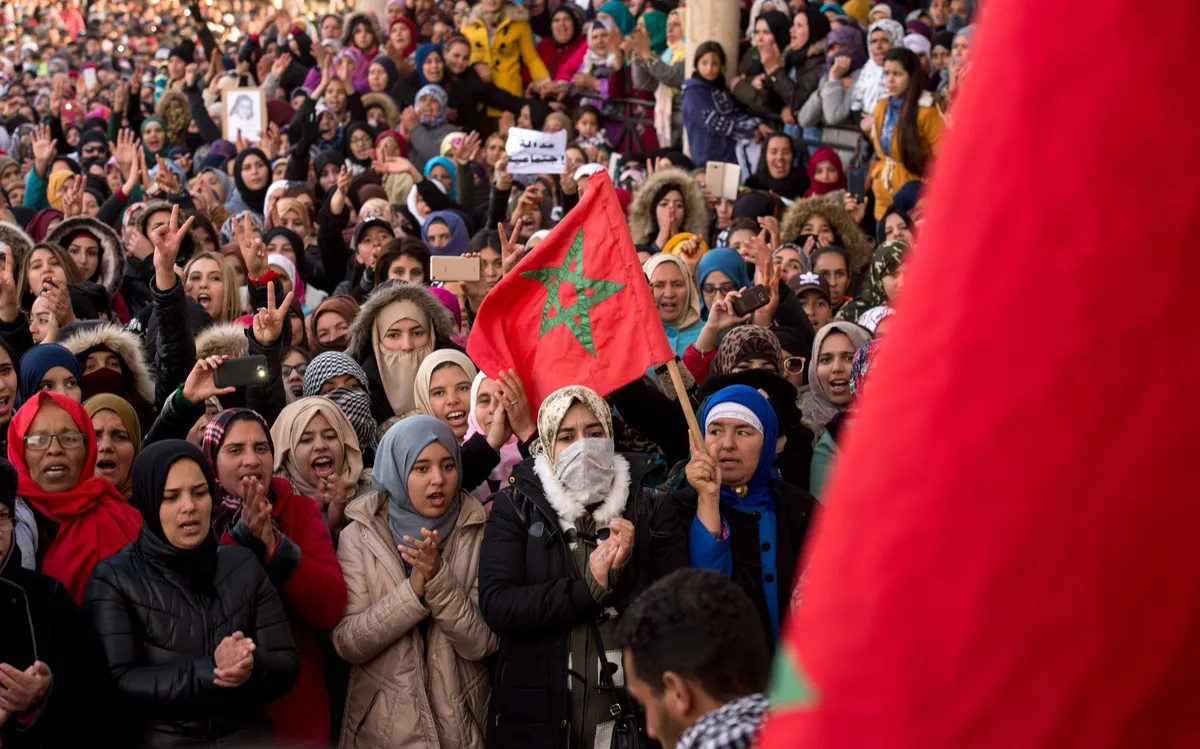
Moroccan youth are leading a wave of protests under the banner of an online movement (GenZ 212) that has spread to several cities, demanding better education and health care and protesting against the huge spending on projects such as the preparations for 2030 with major events. These protests escalated in late September and resulted in violent clashes in some areas (hundreds of arrests and hundreds of security personnel and a number of civilians injured, as well as deaths reported in an exchange of fire at a site in the south of the country, with reports of burning and looting in some places), and this is the largest social movement since the 2016 protests. Digital connectivity and the role of platforms such as TikTok, Instagram and Discord in organizing the crowds and driving youth mobilization were very prominent, because of fertile ground such as (high youth unemployment, inequality, weak health care, and the feeling that development priorities do not reflect the needs of the population). Here the question arises: will the Jews let Morocco slide, or will they intervene to save it? The Jewish dimension in the Moroccan case remains a highly influential factor, even if it does not always appear at the forefront of the scene; Morocco has historically maintained a special relationship with the Jews, as it was home to the largest Jewish community in the Arab world until the middle of the twentieth century, and its name was linked to the positions of King Mohammed V, who refused to hand over the Jews to the Nazi regime, which entrenched the image of Morocco as a safe haven for them. Today: although the number of Jews inside Morocco no longer exceeds a few thousand, the Moroccan communities in Israel, France, Canada and America maintain close ties with the motherland and enjoy political, economic and media influence that cannot be ignored.
Since the restoration of relations with Israel in 2020 within the framework of the Abraham Accords, Morocco has acquired an additional strategic dimension: it is the only Arab ally in North Africa that normalized relations in exchange for American recognition of its sovereignty over Western Sahara.
This has made Morocco’s stability a vital matter for Israel and for the Jews of Moroccan origin spread around the world; hence it is unlikely that Morocco will be left to face a slide into chaos. That would mean Israel losing its gateway in the western Mediterranean and losing a long-awaited strategic gain. But the nature of this support will not be military or direct; it will take the form of soft pressure through diplomatic channels in Washington and Paris, encouraging investments and economic programmes, and defending Morocco’s image in international forums if it is criticized on human rights. On the other hand, the biggest challenge facing the Moroccan state remains balancing this external support with the position of the domestic street, which is marked by broad sympathy with Palestine and looks with suspicion on the path of normalization. In short, the depth of the Moroccan–Jewish relationship indicates that Morocco will not be left to collapse, but pressure will be directed towards the option of reform and calm, not blind repression, in order to preserve its stability as a pivotal state in North Africa and a soft pillar for Israel in the region. In any case, the weapon of the electronic platforms, which al-Natan [Netanyahu] considered his effective weapon, remains the most dangerous means, and we must benefit from previous lessons.