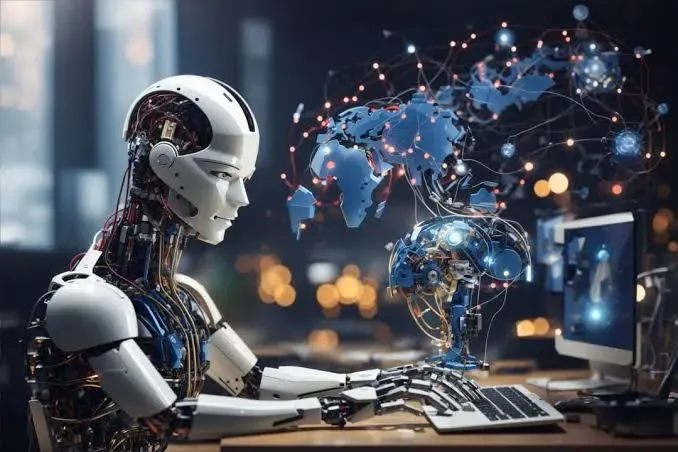
Whenever a new technology appears, people divide: one group fears it, and another sings its praises. And we rarely ask the most important question: who is holding it?
Think with me about the kitchen knife: with it you cut bread and prepare food, and with it a person may be wounded; do we blame the knife? Of course not. We blame the hand, and we blame the intention; and artificial intelligence, however dazzling it may seem, is no different from the knife in this.
Those who made these advanced programs mostly wanted good, “faster science, more precise treatment, and knowledge that reaches every home”, but the good intention of the maker protects no one from misuse by others.
And this is what we see today: a voice imitated to deceive people, a picture fabricated to defame a person, and news manufactured to ignite strife; the tool is the same, but the hands have changed.
And here I want us to pay attention to something! The most dangerous thing is not that the machine “thinks” like us, but that we stop thinking, that we believe everything presented to us because it looks polished. That when there is an error we say: “the machine did it”, as if no one had written for it, directed it or pressed the button.
So who is responsible, then? The answer is that we are all partners in this:
The companies that make these tools must take care that they do not become a weapon in the hands of abusers, and be frank about what they make.
The state must set clear rules that do not lag years behind the technology, and deter those who exploit it against people.
We, as individuals and families, must verify before we believe, and teach our children how to ask questions and not be content with receiving.
We do not call for fearing progress or moving away from it, for whoever stops the wheel of science falls behind; I only invite you to carry the question with you every time: why am I using this tool? And what will result from what I do with it?
Capability without values is a weapon without a compass, and artificial intelligence is ultimately a mirror: it reflects what we bring to it; if we bring good, it multiplies it, and if we bring harm, it multiplies that too.
So beware, for you are not just using a tool, you are choosing what you will become.
