An armed militia is not just a group outside the state; it is an entity that draws its survival from weakening the state’s institutions, resorts to arms rather than law, and is often tied to foreign agendas that make its decision hostage to others. Its danger is that it does not stop at the borders of the state in which it arose, but turns into a tool for threatening its neighbours and destabilizing the region.
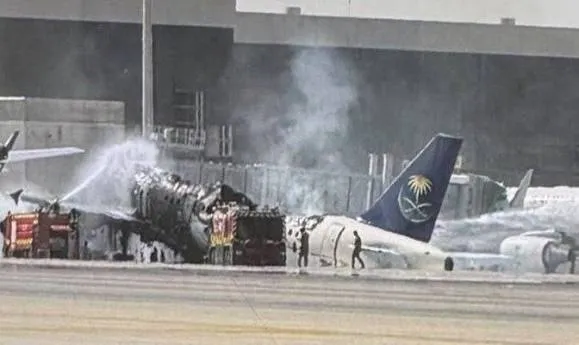
What we are witnessing today in Yemen and the Kingdom is the best evidence. The calm that has held since 2022 has cracked amid a wider regional war, and attacks on Saudi airports have escalated, including King Khalid Airport in Riyadh, until Saudi Arabia, Egypt, Pakistan and Turkey issued a joint statement condemning the Houthi attacks. Targeting airports, civilians and shipping lanes violates the rules of international law, and no grievance or political aim justifies it.
The truth is that the Houthis have become a striking force with an arsenal of missiles and drones, and analyses estimate that they have preserved their operational capabilities despite the strikes they have received. This makes late containment harder and more costly. But deterrence is not made by weapons alone; it is made by a clear position that the adversary believes, hence the importance of the clarity and frankness that characterize the American position according to President Trump’s statements: when the adversary realizes that the threat is serious, negotiation becomes more effective. Thus firmness and dialogue meet, not so that one cancels the other, but so that each protects the other.
The region faces three paths:
A fragile calm managed through mediation without addressing the roots of the crisis, which remains liable to explode at the first spark; or open escalation in which the area of fire widens and civilians, the region’s economy and international shipping pay the price; or a comprehensive settlement under regional and international sponsorship that controls weapons outside the framework of the state and safeguards everyone’s interests.
Reports, not officially confirmed by Riyadh, point to an Iranian offer of mediation and the opening of direct negotiations with the Houthi leadership; if true, they confirm that the door of diplomacy has not been closed.
We must not repeat the mistakes of the past! It would have been better to contain these groups early through politics and balance before they turned into a threat to their neighbours. But the biggest mistake is not dialogue with adversaries; it is letting them grow until dialogue with them becomes harder and more costly.
Today there is no alternative to the path of peace: serious negotiation from a position of balance that preserves the security of the Kingdom and the region, prevents the repetition of mistakes, protects people and countries, and may stand in the way of the plans intended to be implemented in the region.
The purpose of deterrence is to reach a settlement, not to prolong the war, and a peace built on a balance of power is more lasting than a peace imposed by force or bought with concessions.
