
The System and Information Systems in Banks… Problems and Solutions
Dr. Bahaa Helmy Writes:
The national banks, especially the National Bank of Egypt and Banque Misr, hold the largest share of the banking market, mainly because of Egyptians’ trust in the national banks, which have become part of Egyptians’ national belonging.
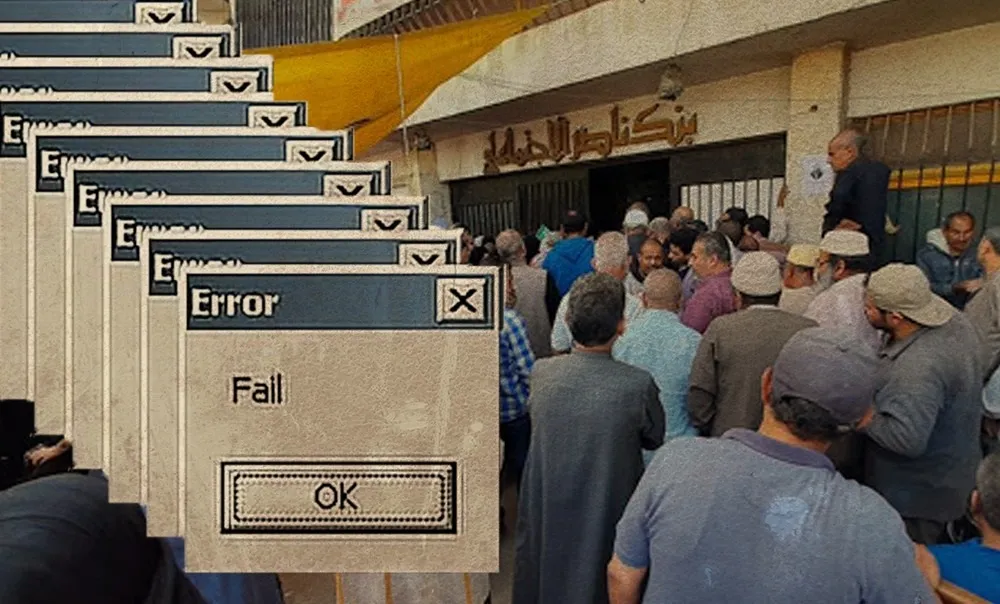
However, the experience of digital transformation and artificial intelligence and the generalization of dealing with smart cards face many problems, resulting in the internet network breaking down and crashing (the system going down) repeatedly in a single day, which exasperates customers at the poor service of these banks.
Add to this the phenomenon of ATMs and electronic branches being out of service, especially at the beginning of each month, which causes resentment among pensioners, who make strenuous efforts to collect their monthly entitlements.
In addition to the bank’s arbitrariness in not meeting the wishes of some customers to close some of their accounts, or their request not to receive the monthly account statements that reach them forcibly, as long as they can view them electronically.
Some bankers explain that the system and the ATMs break down because of the increased demand for them at the beginning of each month, while others attribute the cause to the new electronic services being launched by the banks, among other explanations
Here we propose that the national banks adopt an initiative (Your Pension at Your Home), the substance of which is delivering pensions to their holders at their place of residence, by establishing a special company for this purpose or contracting with a company able to carry out what is required by allocating armoured vehicles to deliver the pension, by recording the pensioner’s withdrawal with the card assigned to him through a machine that records the transaction, with the amounts paid out in cash by the representative and signed for by the withdrawer, while evaluating the experiment before generalizing it throughout the Republic
The bank can bear the fees for this service from the prescribed social responsibility allocations (7%) to lighten the burden on pensioners, widows and people with special abilities.
On the other hand, banks should commit not to add new electronic services and wallets without scientific studies of the number of customers, calculation of the monthly peak time, the required database capacity and the efficiency of the software, to avoid
the problems of the system crashing, and to update the types of ATMs to suit the volume of dealings when the bank’s customers withdraw the monthly returns on their savings.
It would be appropriate to reconsider the timing of loading the machines with money through cash-in-transit companies, so that their work begins in the evening and night period in coordination with the police according to established practice, instead of the morning period, and to treat the problem of the small number of tellers or customer service staff and of windows left empty of staff in bank branches.
And the need for banks to adopt crisis management with regard to customer service and to develop urgent solutions through analysing and studying the problems affecting the efficiency and quality of services, appointing a number of staff commensurate with the speed of completing customer service, and setting a standard for the time taken to complete customers’ requests, in order to preserve the existing trust and attract new customers in light of the competition with the other banks in the banking market.