
Violence in Society… Where To?
Dr. Bahaa Helmy Writes:
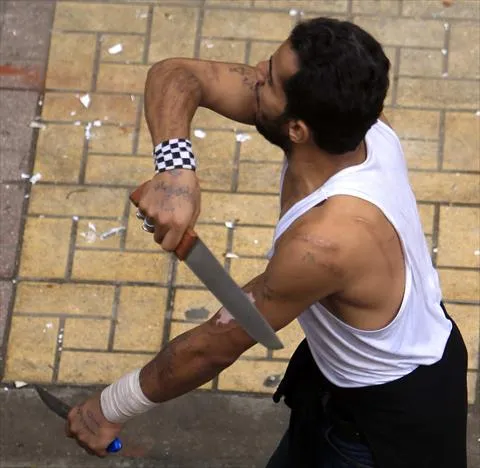
The phenomenon of violence in Egyptian society is escalating frighteningly; every day we are surprised by a news item or a video clip on social media of scenes of assault and thuggery or of stabbing and bloodshed that shake the conscience, drain the tears and ring the alarm bells.
The repeated scenario of crimes in which entire families are killed, such as the incidents of Kafr El-Dawwar, Ismailia, Beheira, Hadayek El-Ahram in Giza and El-Rehab in New Cairo, and the killing of five people in a dispute between two families, and others.
Alongside incidents of people being thrown from the balconies of their homes, such as the Montaza police station incident in Alexandria and the El-Salam incident in which the late Dalia was the victim, in addition to examples of assaults by some outlaws on citizens and acts of thuggery, such as the assault on the Mokattam officer, the dragging of a citizen in front of passers-by, and the assault on a schoolgirl, her mother and her sister by a woman, her daughter and her cousin in front of her school in the Maadi area, chasing them inside the school and beating them with a thick stick, breaking the nose of one of them and causing a pelvic fracture with bleeding in the eye, in an incident circulated on social media under the title (the dragging of the Maadi girl), is something that sounds the alarm and raises the question: where are we going?
Has society become an arena for violence and crime? What are the reasons for the spread of violence? What is the reason for the return to the roots and practices of Stone Age violence at the expense of human values? Where is the role of Al-Azhar, the Church, the media, culture and civil society organizations?
When will the citizen restrain the urge to publish and circulate images and scenes of violence on social media? And what are the factors that have influenced the escalating pace and means of violence and cold-blooded killing?
Was society affected by the violence of 2011 in the pattern of crimes in Egyptian society? And what is the effect of ISIS propaganda and media and the chaos of fatwas on the ideology and convictions of extremists and the way they commit crimes of violence?
What is the effect of globalization and information technology on the spread of means of violence and on becoming accustomed to scenes of blood, killing and the violation of humanity?
What are the reasons for arousing aggressive tendencies and violence in some? And what is the effect of ignorance, frustration and poverty on the loss of hope and the entrenchment of a spirit of hatred and hostility and deviation from religious principles and moral values?
What is the role of religious scholars and clerics, professors of sociology, thinkers, writers, intellectuals, men of letters, poets and wise men.... in confronting the escalation and treating the phenomenon of violence in society? When will the programmes inciting discrimination and the labelling of others as unbelievers, a label that carries a jihadist connotation against the other, stop?
The matter is no longer limited to domestic violence, violence against women or against children or youth violence, nor is it any longer only verbal, physical or psychological violence; rather, it has reached all segments of society with its different cultures throughout the Republic (governorates – districts and cities – villages and their hamlets).
The causes of violence are many and vary according to the point of view of researchers and analysts and according to their convictions and affiliations, but everyone agrees on the negative effects and repercussions of these painful acts and crimes on the physical and mental health and feelings of the members of society, especially children, and the reflection of this on their behaviour.
Violence in society has become a factor affecting religious and social principles and values, and it also negatively affects peaceful coexistence, citizenship, the spirit of tolerance and brotherhood, and the degrees of safety and tranquillity that distinguish the people of Egypt the protected.
This calls for the importance of considering harsher penalties for thuggery and violence in society, with heavier penalties in the case of recidivism; speeding up litigation procedures to rule on those crimes so as to achieve general and specific deterrence; strengthening police efforts to quickly apprehend crimes of violence and thuggery as soon as they become known, except for family crimes, in compliance with the provisions of the Constitution and the law and to preserve the privacy and unity of the family; and coordination and cooperation among the bodies concerned with combating crime, caring for juveniles and combating drugs, in cooperation with professors of sociology at Egyptian universities and with the participation of representatives of religious institutions and the media, to hold conferences and workshops at the level of the various governorates to study the phenomenon and come up with a national vision for solutions, since it is a phenomenon that affects security, stability and future generations. To be continued.