
Weekly Article: Dr. Bahaa Helmy Writes: The Minya Events Between the Ideology of Violence and the Authority of the State
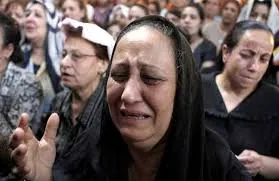
The Minya Events Between the Ideology of Violence and the Authority of the State, Dr. Bahaa Helmy Writes It seems that the black banner is spreading to hang over the districts and villages of Minya Governorate, as an expression of grief and sorrow at the coercive and arbitrary treatment to which some residents, Egyptian Christians, are subjected, and at the violation of constitutional principles – especially everything relating to the protection of human rights and citizenship – by some holders of extremist thought who have the power to mobilize and direct people to march in non-peaceful processions and demonstrations to attack others, without any legal authority vested in them, in defiance of the authority of the State and its Constitution. The thinking of the black banner also hangs over many minds across Minya Governorate – which was once called the bride of Upper Egypt – increasing the number of those who embrace terrorist ideas and hatred, along with many followers who have not been fortunate enough to receive a share of culture or to learn the simplest human values of how to deal with their partners in the nation. The districts and villages of Minya Governorate have a long history of sectarian incidents, or rather terrorist incidents, having produced many leaders of extremist thought locally and internationally, and they are considered a home of extremism and violence. The good land of Minya witnessed the most heinous terrorist incidents targeting Egyptians and State institutions in the 1980s and 1990s, which led some to call it the capital of extremism, as a stronghold of the Islamic groups and a center for exporting extremism with the support of the Muslim Brotherhood, the mother group. That period saw the storming of the Assiut Security Directorate, the assassination of President Sadat, and attacks on security personnel, tourists and Egyptian Christians – looting their money, burning their homes, displacing and terrorizing them, and setting up sharia courts – before the State succeeded in imposing its security control over these areas. It seems that the scenes of killing and burning, of citizens being driven from their homes, which were burned after being looted, of preventing them from praying whether in a church, in the street or at home, and of demolishing houses suspected of being churches – scenes the whole world witnessed during the rule of the Islamic State (ISIS) in parts of Iraq and Syria, and which are now happening in Minya Governorate – are nothing but the same scenarios of the extremist ideas that have long been promoted in the villages of Minya Governorate. The holders of this thinking are still inventing and devising new means of violence and collective punishment, of stripping and sexually assaulting women, without treatment or comprehensive confrontation. Here the question arises about the meaning of the authority of the State, the rule of law and persecution. Are we to let the thinking of cutting off heads, rather than planting roses and hope in life, take root in minds indefinitely? The State stands above individuals by virtue of the public authority granted to it and the various agencies with which it is equipped to ensure the security and safety of society, for the sake of its survival and continuity. In a state governed by the rule of law, no transgression will be permitted, and no individual or group will be left to discriminate, to dominate or to impose the logic of force on any citizen or resident of the country, because in a democratic state the judiciary has an authority and power that places everyone under the law, and the practice of terrorizing citizens or driving them from their homes will not be permitted. If the advancement and progress of democratic states is measured by the extent of their compliance with the law, then the efficiency of the security services is measured by their integrity, their impartiality and their ability to change their policies and to deal with such events as the law provides, without any compromises, pressures or customary reconciliation sessions. The measures the State takes to entrench the rule of law in the face of the ideology of violence endemic in some of its regions will also be measured by its ability to establish a modern democratic state. Many talk about strategies to combat terrorism and the ideology of violence and extremism, and about studies of its causes, and whether an environment of ignorance, poverty and disease and a weak religious establishment is fertile ground for spreading extremist thought. Why have the perpetrators of these acts not been tried before the Emergency Supreme State Security Courts, since they are competent to hear crimes related to the Terrorism Law, crimes under the Demonstrations Law and any crime under the Penal Code that threatens national unity and public order or promotes extremist ideas with intent to stir up strife – especially as the whole country has been under a state of emergency for 3 months since mid-July 2018?