
What Do the 2025 Government Shutdown and the Credit Rating Downgrade Mean for the US Economy?
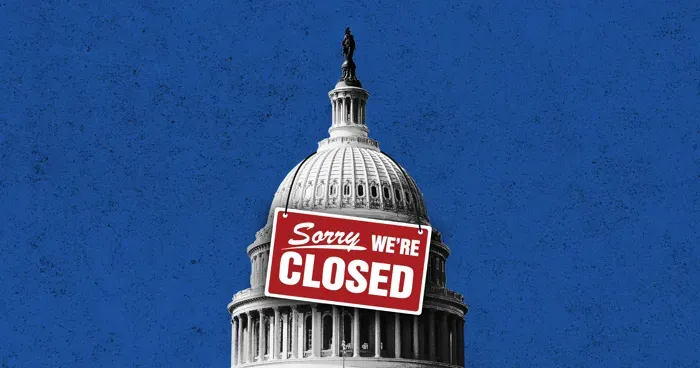
This development is reflected directly in the economy, for the 2025 government shutdown is not considered just a (temporary disruption) but a sign of the depth of the crisis between politics and the economy in Washington: in the short term it harms growth and consumer spending, in the medium term it raises the cost of borrowing, and in the long term it weakens global confidence in the ability of the United States to maintain its financial standing as the strongest economy and the largest issuer of the world reserve currency. Comparing the deficits of the three major economies, we find that in the United States the federal deficit reached about 1.83 trillion dollars in 2024, with expectations that it will remain at high levels in 2025. But the most serious development was the credit rating downgrade in May 2025 and the descent from the top credit rating. This means higher borrowing costs in the future and a growing debt-service burden. Matters got worse with the country entering a government shutdown in October 2025, and this shutdown harms growth, as each week of it is estimated to reduce GDP by about 0.1 percentage point; it also disrupts the salaries of hundreds of thousands of employees and weakens investor confidence in the long term. China, for its part, raised its budget deficit to about 4% of GDP, the highest rate in decades, with Beijing betting on an expansionary fiscal policy to support slowing growth and stimulate consumption. As for Russia, it recorded a deficit of about 1.7% of GDP in mid-2025, a relatively limited figure, but one highly sensitive to oil and gas prices. Although Moscow relies on energy revenues to fill the gaps, sanctions and military spending weigh on it. This comparison reveals that the American deficit is the largest in size, but it also reflects an internal political crisis that threatens the image of a (safe haven), and the most important lesson is that institutional trust has become the real determinant of the future of deficits and debt in a turbulent world. Which portends a real danger to the economy and the American citizen.