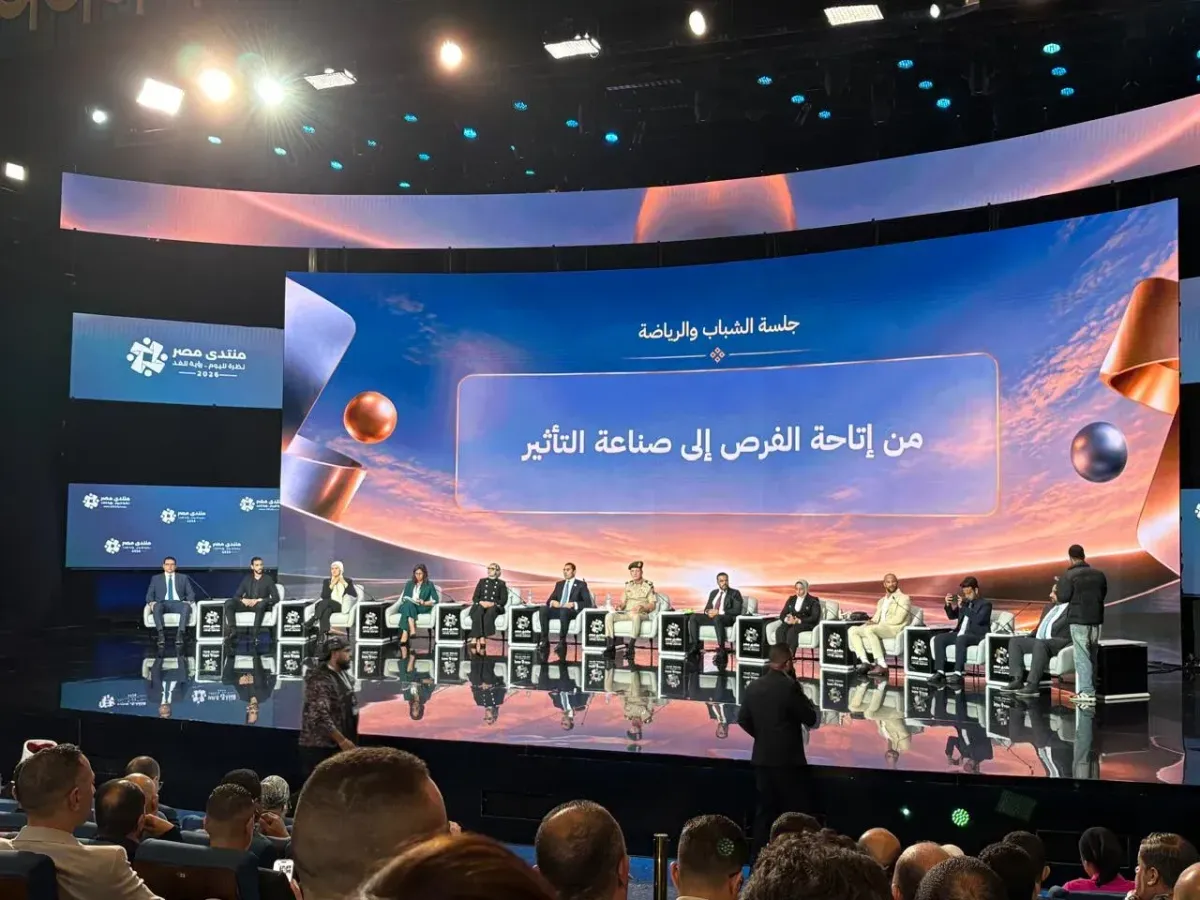
When the head of state invites people to dialogue, the invitation alone is good news and the beginning of a remedy for a gap the citizen has begun to feel between himself and his government. But it is not enough! Dialogue is not a hall, a slogan or sessions that end with a souvenir photo; dialogue is an idea: that we believe that in every head there is an idea worth listening to.
And the “Egypt Forum 2026”, launched in the New Capital, is a real opportunity for more than one reason:
First: openness: the best thing about an open, broadcast dialogue is that it brings the talk out of closed rooms into people’s homes. The citizen who sees his problem raised on screen realizes that he is not alone, and the official who speaks on air knows that his words are recorded and that people will ask him about them tomorrow; thus the promise becomes a commitment, and the door to interpretation narrows.
Second: it brings people and experts together at one table; the citizen often knows his problem well and the expert knows its solution, and they never meet. The forum is a space for this meeting.
Third: it shortens the distance between decision and reality: a decision drafted after listening is closer to success than a decision written behind closed doors, because early objection is far cheaper than a late mistake.
Fourth: it puts priorities in their right order: health, education, work, housing and services, that is, what people touch in their daily lives.
Fifth: it heals and protects; much of the anger in our lives is not a rejection of the state but a feeling that no one is listening, and when the citizen talks about his problem in a hospital, a school or a government office and finds someone who writes it down and answers, something inside him calms even before the matter is resolved. Rumours and campaigns of doubt grow in a vacuum, and if people find a legitimate platform for questions and objections, the space narrows for those who trade on their pain. And the value of openness is complete when the screen makes room for different voices and difficult questions, for people believe those who allow them to ask.
But dialogue has one test in which there is no flattery: what comes after the last session? Listening is the beginning of the road, not its end. The forum’s success will be measured by how much of its words turn into policies and services, and by what people see in a problem solved and an opportunity opened. If the effect is absent, the benefit turns into its opposite, because whoever raised his expectations and then found nothing grows more frustrated.
So let us take the invitation seriously and ask ourselves: did we take part with our opinion, or were we content with watching? The door is not opened for spectators.
Thanks to the originator of the idea of the Egypt Forum 2026, and this is the true beginning of our new Egypt if it continues on this path.
